
Hip of happening? | Digital Employee Experience (DEX).
Een laptop die je elke dag opnieuw moet opstarten, vijf minuten zoeken naar ontbrekende informatie of een applicatie die je alleen op die ene omslachtige manier kan openen. Het zijn kleine frustraties, maar bij elkaar opgeteld kosten ze je organisatie behoorlijk wat tijd, productiviteit en werkplezier. Het probleem is dat veel van deze frustraties de IT-afdeling nooit bereiken. In deze blog zoomen we in op Digital Employee Experience (DEX) en waarom dit vaak meer zegt dan het aantal IT-tickets.
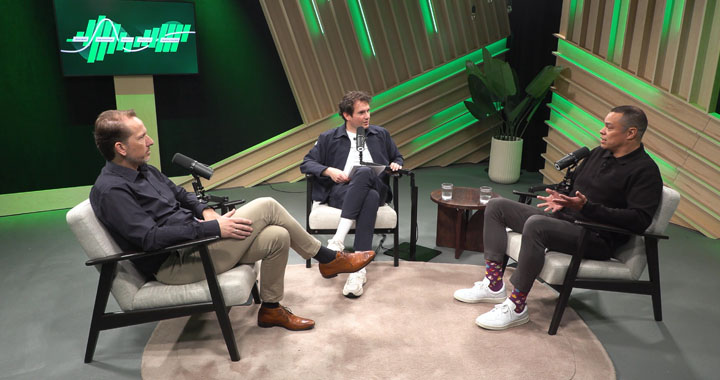
In the first episode of our podcast series Hip or Happening?, author and DEX expert Christiaan Lustig and Daniël Maelissa, Workspace Expert at Bechtle, explored the overall digital experience employees have throughout the working day. Every interaction plays a role, from the laptops and software they use to the information they need and the digital tools that support collaboration.
As Christiaan explains: “The question isn’t only whether technology works from a technical perspective. Equally important is how employees experience it in practice.” Are they able to do the job they were hired to do without unnecessary interruptions, with systems and processes that work together intuitively, or do seemingly minor frustrations continue to consume time and energy every day? Many organisations struggle to see those day-to-day experiences clearly. Not every disruption, cumbersome process or workaround results in an IT ticket, and many issues never reach the IT team at all.
“Employees can therefore be dealing with very real problems while IT remains largely unaware of them,” Daniël explains. “The important question is whether you truly understand how employees experience IT from day to day.”
If you’re handed an old laptop on your first day at work, that doesn’t just say something about the hardware. It also subconsciously says something about the attention you receive as a professional and the resources you’re given to do your job well.
Christiaan Lustig, DEX expert
For many IT teams, tickets are an important source of information because they reveal how often specific issues occur and how quickly they are resolved. As Christiaan points out, however, “A ticket only exists once someone decides to report a problem, and that doesn’t always happen.”
Some employees have found a workaround, others don’t consider the issue serious enough to report, and some simply don’t have time to log a ticket in the middle of their working day. After all, meetings continue, customers are waiting and deadlines still need to be met. Daniël sees the same pattern in conversations with customers. “Employees know something isn’t working quite as it should, but they find a way to keep going.”
As a result, the issue never makes it onto the IT team’s radar, so fewer IT tickets don’t automatically translate into a better digital experience for employees.
Rebooting a device, spending five minutes searching for missing information or taking a few extra steps just to log into an app. None of those issues is likely to trigger an urgent management meeting, yet digital frustration stems from the cumulative effect of exactly those small moments. Once employees start losing valuable time every day to technology that doesn’t work properly or processes that simply don’t make sense, the issue is no longer just about IT.
Productivity, collaboration and ultimately the overall experience of work all suffer as a result. “Employees expect IT to just work,” says Daniël in the podcast. Few people see that as a luxury. Just as you expect water to come out of the tap, you expect the tools you rely on every day to support your work without getting in the way.
Digital Employee Experience (DEX) extends far beyond the IT department. The way people experience technology forms part of their overall employee experience, influencing how they perceive the organisation from day one. Onboarding is a good example. Imagine a new colleague starting on Monday. The contract was signed weeks ago, yet their first morning is spent visiting IT and waiting an hour and a half for a laptop to be set up and ready to use.
Technically, the issue is resolved. As a first impression of a new employer, however, it leaves a lot to be desired. As Daniël points out: “There’s no reason a device can’t be ready before an employee’s first day.” In his view, that should increasingly become the norm. “People want clarity from day one and to get started straight away.”
Christiaan takes the argument a step further. “Being handed an outdated laptop on your first day isn’t just a statement about the hardware itself. It also sends an unspoken message about how much you are valued as a professional and the resources you are being given to do your job well.” Does that mean employees will leave because they’ve been given a poor laptop? “Of course not. Good leadership, supportive colleagues and meaningful work matter far more. Even so, the digital workplace plays a role in people’s day-to-day experience. Viewed through that lens, DEX becomes just as relevant to HR as it is to IT.”
Digital Employee Experience is about far more than measuring employee satisfaction or device performance. A laptop may be part of the equation, but only a small one. DEX encompasses every digital interaction employees have throughout the working day, from hardware and software to communication, information access and collaboration, ultimately shaping how easily they can get their work done.
Monitoring and analytics tools help make those experiences visible. Data alone, however, changes nothing. As Daniël emphasises in the podcast, DEX needs to be driven by a clear purpose. The real value lies in collecting information, interpreting what it reveals and translating those insights into action. As Christiaan explains, “The experience is shaped by the combination of technology, configuration and content.”
Without that broader vision, a DEX platform is just another piece of technology. Employee experience quickly risks becoming yet another IT project, which is precisely what DEX was never intended to be.
IT manages technology, HR focuses on people, Internal Communications owns information, and Facilities looks after the physical workplace. Employees, however, don’t experience their working day through departmental boundaries, they simply experience work. Creating a better Digital Employee Experience therefore requires collaboration across teams and disciplines. Daniël and Christiaan see exactly that as the next major step forward.
In an ideal situation:
- IT ensures devices function properly from a technical perspective
- HR picks up signals about frustrations and onboarding experiences during employee conversations
- Facilities identifies issues in meeting rooms
- and Internal Communications understands which information employees consistently struggle to find.
As Christiaan puts it: “Individually, they may seem like small things, but together they tell a much bigger story. Reducing digital frustration requires looking beyond the IT bubble and understanding the wider employee experience.”
Improving Digital Employee Experience doesn’t have to begin with a large-scale programme. Often, the best place to start is with a conversation.
- What does a typical working day look like?
- Where do you start, and which systems do you use throughout the day?
- What obstacles do you run into?
- Which workarounds have become so routine that you barely notice them anymore?
- Christiaan often starts with a simple question: “Are you able to do the work you planned to do?”
Those conversations become even more valuable when combined with the data already available to you. Look at ticket trends, device data and recurring issues. Review processes such as onboarding and offboarding from beginning to end. Look for patterns across different employee groups. From there, start small by addressing a recurring frustration and measuring the impact of that change. Keep listening, keep measuring and build on what you learn.
Ultimately, every organisation should ask itself a simple question: what digital frustrations are holding employees back, and which improvements would make the greatest difference to their day-to-day experience?
In the podcast series Hip or Happening?, we explore whether an IT development is merely attracting attention or already delivering tangible value, accompanied by the Bechtle Beat, the rhythm of innovation. A trend is considered “hip” when it generates widespread interest, and “happening” once it starts creating measurable benefits in practice. Curious to find out where DEX stands? Tune in to the episode to discover whether DEX has moved beyond the hype and what role it plays in employee satisfaction and workplace happiness.
Do you know which frustrations employees encounter day after day, even when they never report them? Complete our DEX Assessment and discover in just a few minutes where potential blind spots may be affecting your employees’ digital experience.