


Next-level client management with DEX platforms: Proactive, efficient and AI-powered IT support.
Stable systems, smooth workflows and proactive IT operations don’t happen by chance. They are the result of a deliberate strategy. Digital Employee Experience (DEX)—the measurable quality of employees’ day-to-day digital workplace experience—has long since moved beyond being a niche topic and become a key driver of IT quality, efficiency and measurable business outcomes. Bechtle helps organisations establish DEX as a strategic management tool and integrate it into their client management approach.
Send us a message and our experts will be in touch.
Key benefits of next-level client management with DEX.
Digital Employee Experience (DEX) and next-level client management: Two sides of the same coin.
Whether it’s a notebook, an application or network access, workplace technology has become an integral part of how employees experience their organisation. When systems are reliable and intuitive, employees can stay focused and productive. Frequent disruptions, long waits for IT support or difficult-to-use applications, on the other hand, have a direct impact on satisfaction and performance. This day-to-day experience of workplace technology is known as Digital Employee Experience (DEX).
A strong DEX does not happen by chance. It relies on professional client management, providing the foundation for the central management, protection and maintenance of all end-user devices across the organisation. Traditional client management often focuses on managing notebooks, smartphones and software. Next-level client management takes this a step further by combining endpoint management with continuous monitoring of the actual user experience through both technical metrics and employee feedback. Long loading times, application crashes and performance issues can be identified at an early stage, often before employees even open a support ticket, while updates, patches and security policies are rolled out centrally and automatically without disrupting day-to-day work, making IT operations more predictable, reducing support effort and giving IT teams more time for strategic initiatives instead of recurring troubleshooting.

What is Digital Employee Experience (DEX)?
Digital Employee Experience (DEX) describes how employees experience the technology provided by their organisation in day-to-day work—from notebook performance and application reliability to the quality of video meetings. DEX platforms continuously measure and analyse that experience, helping organisations identify and resolve issues before they affect productivity. Gartner now regards DEX as more than a traditional IT support metric, recognising it as a discipline in its own right focused on how effectively technology supports employees in their daily work.
DEX platforms: Turning insight into action.
To put next-level client management into practice, organisations rely on specialised DEX platforms that combine continuous monitoring of endpoints, applications and network access with analytics and automated remediation, enabling IT teams to identify and address issues proactively rather than tracking every incident individually.
Key facts at a glance
of respondents already use a DEX tool across all or part of their organisation.
of respondents plan to introduce a DEX tool within the next 12 months.
fewer disruption-related backlogs with a fully integrated DEX platform.
through automation. DEX tools quickly identify and remediate technical issues.
Source: Gartner, Magic Quadrant for Digital Employee Experience Management Tools, 8 June 2026.
The growing adoption of DEX platforms reflects their increasing importance, but their full value is realised when they are embedded into day-to-day IT operations. By combining hard technical data with employee sentiment, a DEX platform makes quality measurable and shows how effectively technology supports day-to-day work.
Next-level client management means proactively optimising the digital workplace instead of reacting to disruptions. With DEX-based managed services using AI to identify and resolve issues before they become visible to users, organisations can lower operating costs while enhancing the digital employee experience.
Christian Malzacher, Business Manager Modern Workplace, Bechtle
Securely managing shadow AI.
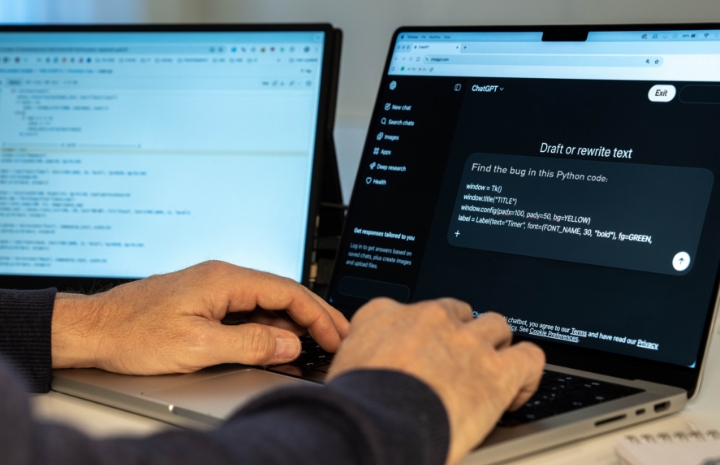
As AI becomes part of everyday work, shadow AI is becoming a growing concern. Employees often adopt AI tools on their own initiative in an effort to work more efficiently, creating blind spots around where data is being shared, which applications are being used and what security or compliance risks may result.
Next-level client management built on DEX platforms brings greater visibility without slowing people down. Continuous monitoring of application usage makes it possible to identify unauthorised AI tools and respond with clear policies, approved alternatives and practical guidance, rather than relying on blanket restrictions. According to Gartner, digital friction resulting from a poor DEX is likely to slow enterprise-wide AI adoption and constrain the productivity gains organisations expect to achieve by 2030. Strengthening the foundations of Digital Employee Experience today therefore also lays the groundwork for secure and effective AI adoption in the future.

Measuring the impact of Digital Employee Experience.
Employees, executives and shareholders all define workplace success differently. This webinar explores how Digital Employee Experience (DEX) helps make those differences visible and measurable.
Choosing the right DEX platform.
The DEX platform market offers a wide range of solutions, and requirements vary significantly depending on an organisation’s size, industry and IT environment. The following questions can help narrow the options:
- Which devices and environments need to be covered? Depending on your requirements, this may include virtual desktops, mobile devices and thin clients alongside traditional notebooks.
- How much visibility is needed across applications and collaboration tools? Some organisations only need basic monitoring, while others require detailed insights into business-critical applications and video conferencing platforms.
- How well does the platform integrate with existing systems? Integration with service management and security solutions can significantly simplify day-to-day operations.
- What level of automation is required? Capabilities range from monitoring and analytics through to automated remediation and self-healing.
- How is privacy protected? Transparency and employee participation are particularly important when usage data and employee feedback are being collected.
Because there is rarely a one-size-fits-all answer to these questions, an independent assessment is often the best starting point, taking into account your existing IT environment, security requirements and organisational priorities.

How we can help.
We take a vendor-neutral approach to helping organisations move towards next-level client management and a better Digital Employee Experience (DEX), from the initial assessment through to solution selection and ongoing operations. Together, we identify where digital friction is affecting employees’ day-to-day work and use those insights to develop a client management approach tailored to your IT environment, organisational structure and security requirements. From the outset, we bring together IT, HR and business teams to ensure DEX is considered from every relevant perspective. Supported by consulting, implementation and managed services, the result is a sustainable approach that reduces the burden on IT teams and gives them more time to focus on strategic priorities.
A DEX platform provides valuable data, but the real value comes from turning those insights into tangible improvements, automating issue resolution and continuously enhancing our customers’ digital workplace experience.
Miles Wittenbrock, Bechtle DEX Competence Centre
Your next step.
Digital Employee Experience (DEX) is not a one-off project. It’s an ongoing discipline that delivers measurable results, from more satisfied employees and more stable IT operations to support teams that spend less time firefighting and more time adding value. Organisations that invest in a well-defined DEX strategy and the right client management approach today are better equipped to meet future requirements around security, scalability, AI adoption and user experience.
Looking to understand how DEX could make an impact in your organisation and which steps make sense for your IT strategy? We’d be happy to share our practical experience and show you what next-level client management could look like in your environment.
Frequently asked questions about next-level client management with DEX.
Next-level client management combines traditional endpoint management with continuous insight into the actual user experience. While conventional client management focuses on devices, software and security policies, DEX platforms also monitor the performance of applications, endpoints and the digital workplace as a whole. As a result, IT teams can identify and often resolve issues before employees notice them or need to raise a support ticket, leading to more stable IT operations, lower support effort and a better digital employee experience.
Digital Employee Experience (DEX) describes the quality of the digital workplace experience employees have every day. It encompasses factors such as device performance, application reliability, network connectivity and the quality of video meetings. A positive DEX supports productivity, improves employee satisfaction and reduces digital friction. By making these factors measurable, DEX platforms help organisations identify opportunities for improvement and turn DEX into a valuable management tool for both IT performance and business success.
DEX platforms provide real-time visibility into endpoints, applications and usage patterns. Automated detection of anomalies, root-cause analysis and, in many cases, automated remediation reduce the need for manual intervention. Fewer support tickets leave IT teams with more time for strategic priorities, while automated updates, improved patch compliance and greater transparency contribute to a more secure and stable IT environment. The result is more efficient operations and greater control over the digital workplace.
As the use of AI applications continues to grow, many organisations are encountering shadow AI, where employees use AI tools that have not been approved or reviewed by IT. By continuously monitoring application usage, DEX platforms provide visibility into the tools being used across the organisation, making it easier to identify unauthorised AI applications, assess potential risks and introduce appropriate policies and controls. Rather than restricting innovation, organisations can encourage the responsible and secure adoption of AI.
The right DEX platform depends on an organisation’s existing IT environment and specific requirements. Key considerations include support for different endpoint types, visibility into applications and collaboration tools, integration with service management and security platforms, and the level of automation required. Privacy, transparency and stakeholder involvement are equally important. A carefully selected platform should do more than provide technical metrics. It should make a lasting contribution to improving Digital Employee Experience across the organisation.