ISE 2026 Wrapped: Cutting Through the Chaos
by Jack Greenwell
Written by

Innovation for Innovation's Sake?
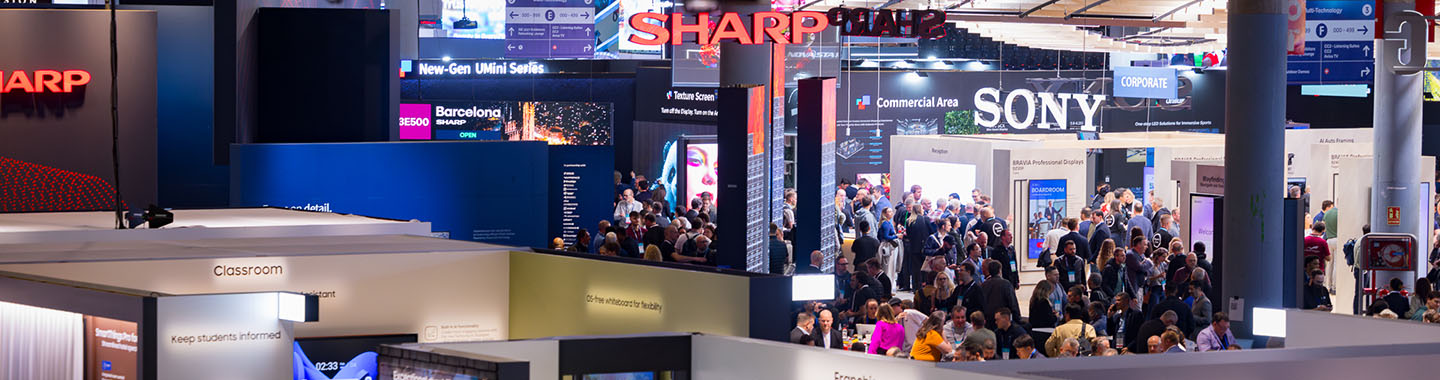
Talk about an assault on the senses. Walking into ISE felt like stepping into a tech theme park minus the inescapable chant of “It’s a Small World.” Everywhere you looked, there were LED walls stretching into the horizon, AI plastered across every corner, and so many product launches that I genuinely started to wonder whether vendors now get paid per announcement.
It was brilliant… and honestly? A bit overwhelming. More than once, I caught myself asking:
Is this real innovation, or innovation because someone felt they should innovate?
Maybe it’s because I’m still relatively fresh to this world, not yet weighed down by years of “this is how we’ve always done it”, but I walked the show floor with a clean slate. No legacy bias. No brand loyalty. Just a genuine curiosity about what actually helps people work better.
And that’s where I realised, I was in a unique position: new enough to question assumptions, but close enough to customers to know what really matters come Monday morning.
What became obvious, fast, is that the organisations winning right now aren’t chasing noise or novelty. They’re choosing reliability over drama, and solutions that fit their real-world challenges, not the flashy distractions surrounding them.
Viewing ISE through that lens, and the clutter faded. What actually mattered began to stand out. And that’s exactly what I’m bringing to you.
Meeting Rooms… They Grow Up So Fast
Picture this: aisle after aisle of meeting room setups, all promising the same thing: simplicity, consistency, and sanity.
And honestly? It’s about time.
Meeting rooms have officially graduated from “nice‑to‑have” to full-blown business infrastructure. The days of piecing together mismatched equipment or relying on setups that work “most of the time” are fading fast.
Now? Organisations expect far more than a flashy single device, they want reliable, high‑quality experiences for every participant, whether they’re in the room or joining remotely.
No more fiddly cables.
No more “it works for Dave but not for Sarah.”
No more praying to the AV gods before clicking Join.
My take? Teams are exhausted. IT is exhausted. Leaders are exhausted.
It's clear, the answer isn’t more tech, it’s better tech. Tech that’s easier to deploy, easier to support, and capable of scaling across entire estates instead of creating one‑room wonders.
Why it matters is simple: rooms that “just work” cut support tickets and free people up to actually do the thing they turned up for. Wild concept, I know.
Let’s be honest, no one walked into ISE thinking, “Wow, I hope someone’s talking about standardisation today.” I know I certainly didn't. But… maybe they should have.
Because beneath the noise, something kept repeating itself like "it's a small world": standardisation is becoming the backbone of reliable collaboration.
I heard the same story over and over:
- Too many room types.
- Too many behaviours.
- Too much confusion.
- Too much firefighting.
My view? Standardisation isn’t restrictive, it’s freeing. It gives you spaces that behave the same, look the same, and don’t require a PhD to operate.
Basically, it's the difference between walking into a room thinking, “Yes, let’s go,” versus “What fresh chaos awaits me today?”
Why it matters? You create a hassle‑free working environment that makes life easier for your users. You generate positive experiences and a collaborative culture where people want to come into the office.
Surface Hub’s retirement wasn’t met with sorrow, it was met with a collective organisational pause.
Not a sad pause.
A “huh… maybe this is our chance to rethink things” pause.
Three big themes surfaced (see what I did there?)
- Longevity over lock-ins.
- Windows-based and platform-agnostic systems are pulling ahead.
- Modularity becoming the quiet favourite.
My take? This is the closest thing most organisations will get to a reset button. Not a sideways swap. A proper rethink.
Sometimes losing a device is the nudge you didn’t know you needed.
Smart office platforms used to be about cramming sensors into every corner and hoping something useful happened. Or just a novelty to say that "our meeting spaces now produce data"...
Not anymore.
What I saw this year was simpler but smarter: making better use of the data buildings already have.
Occupancy. Temperature. Energy usage. Comfort. Tangible patterns you can do something with.
Why it matters: Because this is optimisation without the drama (and the cost). No ripping out ceilings. No rebuilding floors. Just using what you’ve already got and acting upon it.
The result? Workplaces that adapt, support, and smooth the edges… without anyone needing to poke at a dashboard every five minutes.
I told myself I wouldn’t roll my eyes at the first AI banner of the day. Nine minutes in I failed.
And I’ve not even been in this space for very long either...
But here’s the surprise: AI isn’t the villain here. It wasn’t trying to take over the room; it was trying to quietly make the room behave better.
And while you may be tired of hearing about AI (trust me, same), I’m sorry to disappoint you: it’s not going anywhere any time soon. However, here’s the part you’ll appreciate. You’ll notice it most when your meeting room simply behaves better.
What I saw wasn’t AI shouting for attention; it was doing the opposite:
- Cameras that actually follow the right person.
- Audio that adapts like it’s reading the room (literally).
- Framing that feels natural instead of chaotic.
- Automations that remove steps instead of adding them.
My take? The best AI is the AI hiding in plain sight. Invisible AI will lift meeting quality without adding new behaviours for your users to learn.
Not loud. Not flashy. Just invisible wizardry smoothing your meetings along.
After walking more steps than Frodo did to destroy the ring, one message rang loud and clear:
The next 12–24 months belong to organisations that anchor decisions in real problems, not shiny distractions.
A few grounding principles:
- Pick reliability over novelty.
- Standardise. Seriously. It’s the one decision your IT team will bake you a cake for.
- Don’t rush your Surface Hub replacement. Use it as a chance to rethink.
- Let AI help… quietly.
- Use your building’s existing data before buying more gadgets. Acting on the data is just as important as measuring it.
None of this is rocket science. But sometimes the obvious stuff is what gets drowned out by the noise.
Picture over 1,500 exhibitors. Lights. Sound. Noise. Innovation everywhere.
And me, wandering around like it was my first day of big school thinking: does any of this actually fix a real problem?
Ask that question. No, really, ask it, and the clutter fades. Some innovations feel unnecessary. Others suddenly matter more.
And being new to the industry? Weirdly helpful. No brand loyalties. No rose-tinted glasses. Just clarity.
The message I walked away with:
Find what fits, not what’s flashy.
Because when you get intentional, the workplace you’re trying to build becomes much easier to see.
As these trends reshape how your organisation collaborates, now is the perfect moment to pause and take a clear look at how your meeting spaces and your wider workplace are performing
At Bechtle, our vendor-agnostic approach means we’re not here to dazzle you with whatever’s trending. We’re here to find what’s right for your environment.
Whether that’s:
- Standardising your rooms.
- Exploring Surface Hub replacements.
- Unlocking smart office insights.
- AI-driven improvements.
- And more…
…We help you build spaces that don’t just work, but work for your people.
Our Modern Workplace team works across leading AV, collaboration, and workspace technologies, helping you create reliable, scalable, future-ready environments designed with intention, not impulse.
If any of this resonated, we’d love to explore what’s possible and help shape a meeting room strategy that delivers clarity, consistency, and long-term value.
Jack Greenwell.
Modern Workplace Business Development Manager.
Email: jack.greenwell@bechtle.com