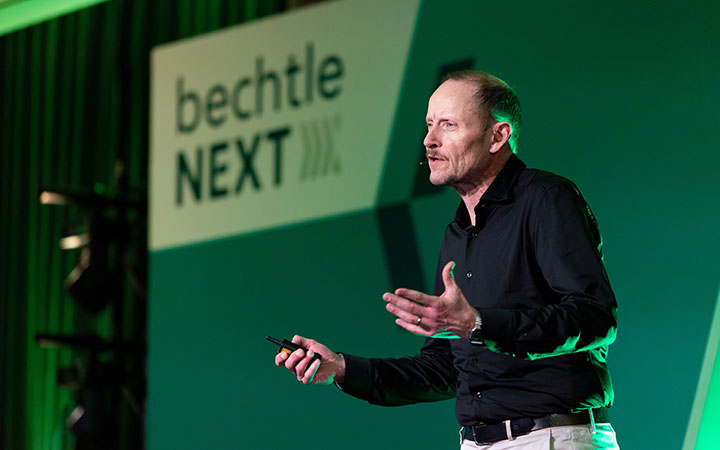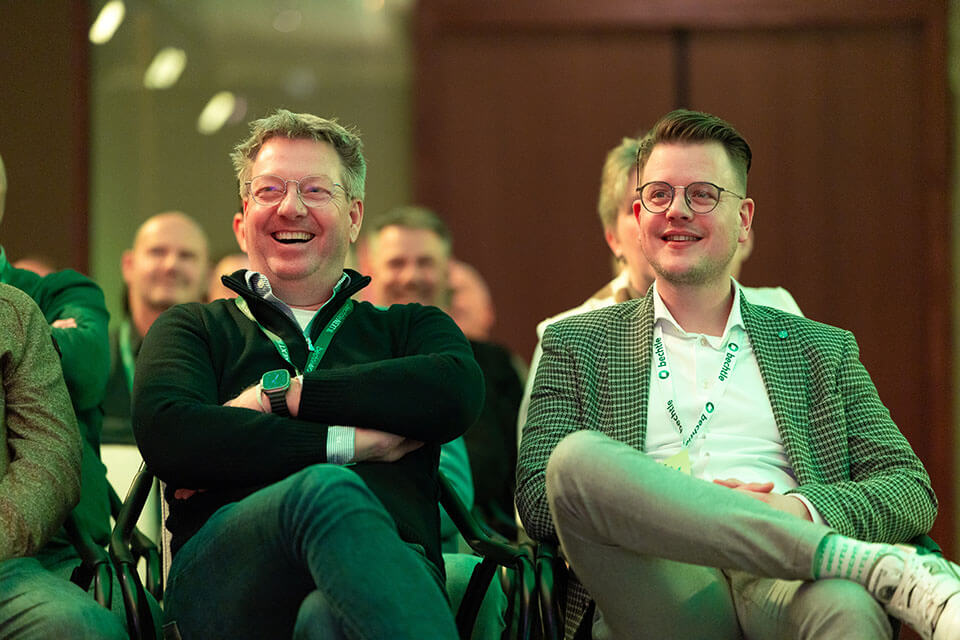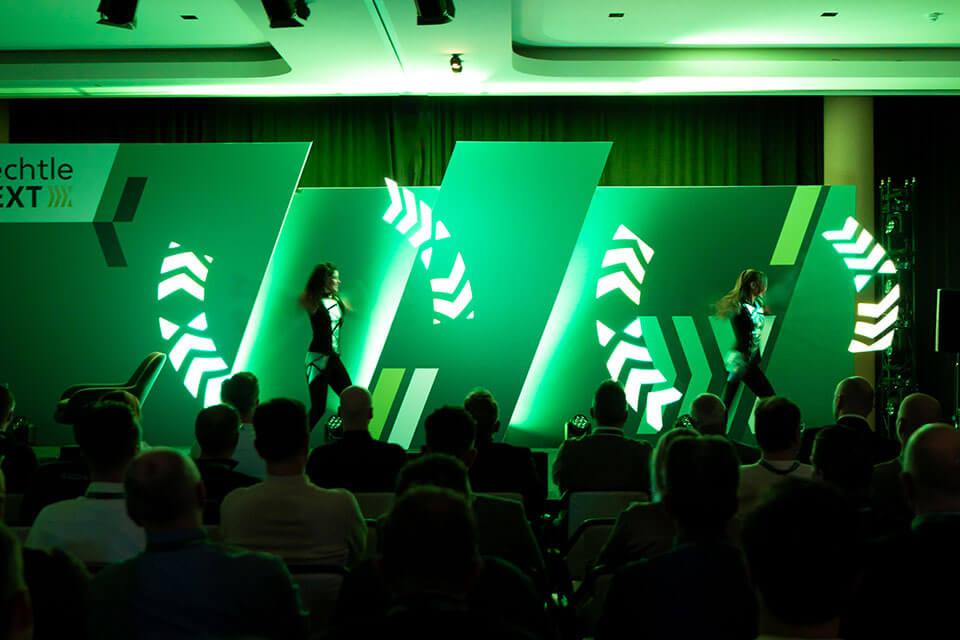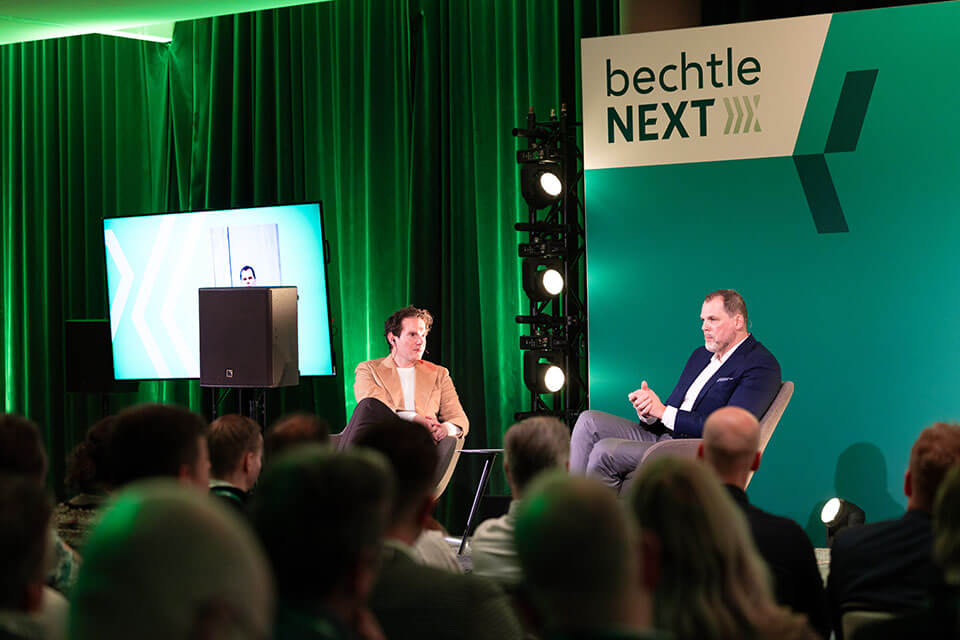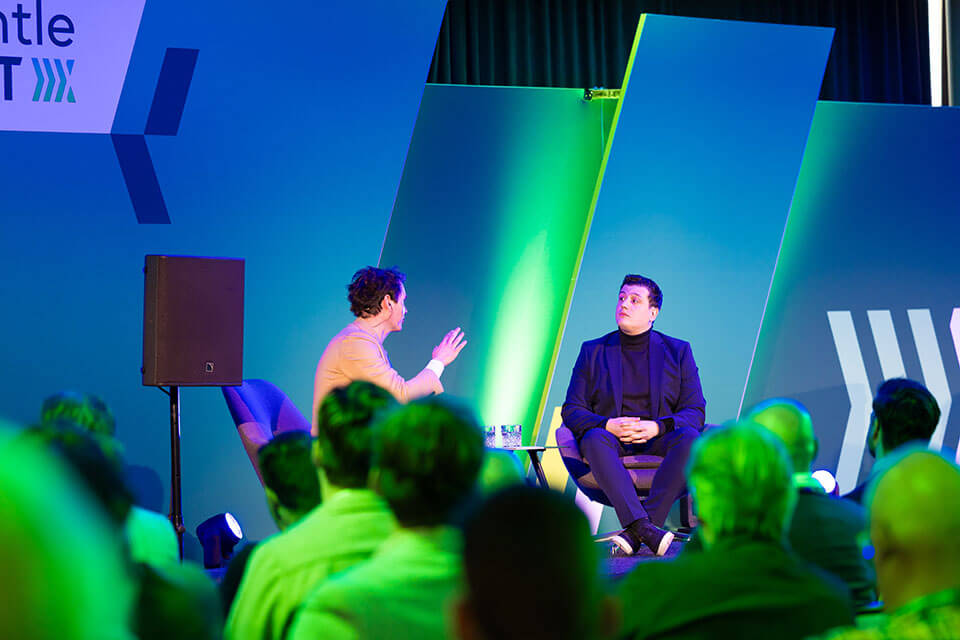
Looking back on the 10th anniversary edition of Bechtle NEXT.
- How can you turn cybersecurity into a strategic boardroom topic rather than a technical issue? (Leen van Duijn, ING)
- How can you ensure that large IT projects run smoothly without disrupting day-to-day operations? (Steven Koeken, Avans University of Applied Sciences)
- Which insights from previous editions of Bechtle NEXT are still current and relevant? (Het Collectieve Geheugen)
- How does data analysis help improve performance both within and outside of elite sport? (Steijn Spreij, KNVB)
- How do you remain human in a world where technology is becoming increasingly intelligent? (Rens van der Vorst, techno-philosopher)
Watch the recap video.
We use YouTube to embed video content on our website. This service may collect data on your activity. For more information, please go to the settings page.
Key takeaways at a glance.

Agility requires choices.
IT environments are becoming increasingly complex. It is impossible to give everything the same priority. That is why it is important to make conscious choices about when to innovate and how. Agility does not mean responding to everything, but focusing on what helps your organisation move forward.

Security as a strategic theme.
Security should be an essential part of your business strategy, a topic for the boardroom, not a separate issue. Geopolitics, administrative responsibility and individual resilience must come together in a modern security strategy. It starts with awareness and action at every level.

Data makes the difference.
Data is valuable. During NEXT, the KNVB showed how data-driven working leads to better performance, more control and smarter choices. But data is not an end in itself. The trick is to ask the right questions, add the human context and ensure a structured process. Data is a tool, not a destination.

The human factor counts.
Technology should support people, make work easier and make your organisation more agile. This is only possible if you keep an eye on the human side of IT. Because in a digital world, it is important to remain human and not to follow technology blindly, but to use it consciously.
Sessions.
Session: Interview with Leen van Duijn, Global Head of Security at ING.
"Whatever the future holds, you decide how to organise your resilience."
Leen van Duijn, who has a background in defence, made the link between geopolitics, deglobalisation and digital resilience. He showed that organisations can choose for themselves: remain stuck in dependency or actively steer their own course. Whether it concerns American tech giants or European alternatives, reputation risks or supply chains, security requires more than just technology. It requires vision, awareness and the courage to ask critical questions. A session that encouraged both thought and action.
We use YouTube to embed video content on our website. This service may collect data on your activity. For more information, please go to the settings page.
We use YouTube to embed video content on our website. This service may collect data on your activity. For more information, please go to the settings page.
Session: Practical customer case study: Avans University of Applied Sciences (Steven Koeken).
"By actively involving both management and employees, we maintained control over a large IT project."
How do you roll out 2,000 laptops in just four weeks without stress, chaos or resistance? And how do you ensure that the old devices are made ready for use with Windows 11, so that employees can get started right away? At Avans University of Applied Sciences, this was achieved thanks to a well-thought-out plan, close cooperation with Bechtle and ARP, and strong commitment from management. Steven Koeken explained how students and staff were actively involved and what they did when people simply didn't show up. (Spoiler: devices were shut down.) A powerful reminder that technology only works if the organisation moves with it. The case showed how good communication, management commitment and smart IT services together ensure peace of mind, control and grip.
Session: Collective Memory.
"Shadow AI arises when organisations do not yet have a clear AI policy, and you see that everywhere now."
What insights from ten editions of Bechtle NEXT events have stuck? And what are organisations really doing with AI, data and the cloud in practice? In this interactive session, visitors and speakers discussed recognisable challenges and inspiring insights. From shadow AI to AI policy, from data management to legal dilemmas: it became clear that many organisations are still searching for answers. At the same time, there was a lot of recognition. The feeling that technology is ahead of policy and that awareness is often the first step. This session provided space for reflection and interaction.
We use YouTube to embed video content on our website. This service may collect data on your activity. For more information, please go to the settings page.
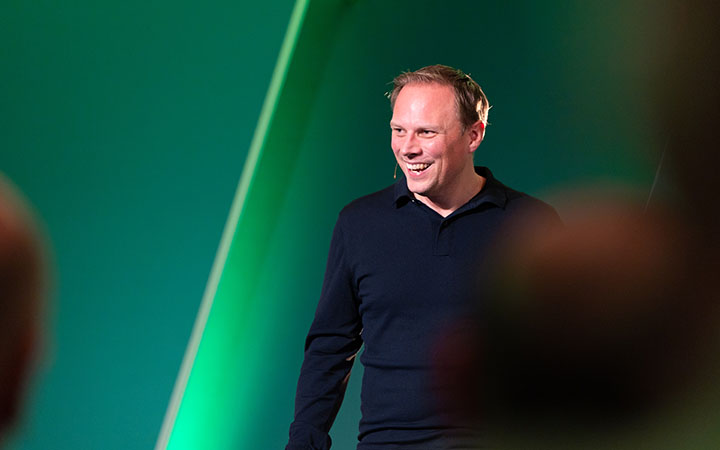
Session: Use of data and IT at the KNVB (Steijn Spreij).
"Data must work together with domain knowledge; only then can you really put it to practical use."
How can you use data wisely without losing sight of the human aspect? At the KNVB, they use data as a sparring partner, not as a guideline. Steijn Spreij took us into the world of performance analysis, video analysis and data-driven scouting. Using examples from Jong Oranje and the senior national team, he showed how data helps to make better decisions, but always in balance with vision, experience and context. His story was about dashboards, choices and cultural change, as well as the role of data analysts at the national coach's table. A session full of insights into how technology can improve the game without losing its romance.
Session: Rens van der Vorst (techno-philosopher).
"It is wise to sabotage technology a little sometimes, not because we are against progress, but to make technology more human."
Using sharp examples and absurd comparisons, Rens van der Vorst showed how technology permeates our daily lives. He asked critical questions. Why do we think it's normal to be on our phones all day? Why do we blindly believe in technology that does not understand us? And what actually makes us human in a world that seems to be getting smarter and smarter? His message was clear: ‘We can be critical of technology and still be in favour of progress.’ Rens called for more diversity in tech, for playful sabotage (like digital gremlins) and, above all, for making conscious choices.