Future of Work – Integrating AI into everyday working life.
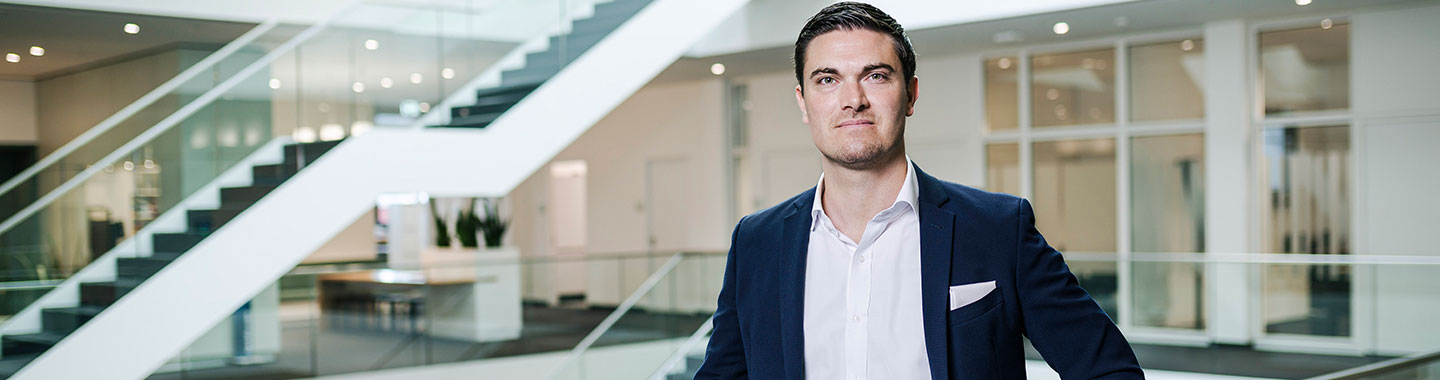
In our interview, Christian Malzacher, Business Manager Modern Workplace at Bechtle, analyses the interaction between AI, smart building technology and digital employee experiences. He highlights the significant opportunities available to companies and the challenges that must be overcome.
Hardly any other technological development is currently impacting the world of work as significantly as artificial intelligence (AI). A mere vision of the future just a few years ago, AI is now a reality and developing rapidly. For companies, this means that now is the right time to integrate AI into their own organisation in a targeted and methodical way. Digital support for employees should always be a top priority.
Would you like to find out more about our AI services?
Write to us! Our experts look forward to exchanging ideas with you.
We use YouTube to embed video content on our website. This service may collect data on your activity. For more information, please go to the settings page.
Everyday AI – your daily companion in the workplace.
“Our focus is those topics that support our everyday lives – with the emphasis on artificial intelligence,” says Christian Malzacher. This is not about abstract future scenarios, but about very practical applications: AI-supported assistants such as Microsoft Copilot facilitate data analysis, task organisation, meeting preparation and follow-up. The tools involved are the same ones employees use every day already.
‘Everyday AI’ is no longer an add-on. It is now a central component of modern work processes. Whether companies are in favour of it or not doesn’t matter; AI assistants have already arrived in most workplaces. The reasons are obvious: they help to save time, simplify decision-making and take over repetitive or tedious tasks. The goal is to enhance productivity and free up time for creativity, strategy and collaboration.
When AI becomes a team member.
One particularly exciting trend is the emergence of so-called AI agents. These digital assistants go far beyond traditional automation. They are able to act independently, learn on the job and take on increasingly complex tasks – not just for individuals, but for entire teams or even organisations.
“We’re talking about AI agents that perform tasks completely autonomously and are integrated into the team like true employees,” explains Malzacher. “They receive an induction programme, participate in feedback meetings and demonstrate measurable professional growth after 100 days – just like human employees.” In the near future, there will be AI agents that can integrate seamlessly into existing structures, make decisions independently and take over tasks completely. They will be given the necessary authorisations to access business applications and act independently, just like their human counterparts.
Managing AI: a new management discipline.
The integration of AI agents into existing teams raises new questions: How many AI agents can one person manage? How will collaboration between people and the “machine” work? And what skills are needed to make this new form of teamwork successful?
Recent experience suggests that introducing AI within a company is not only a technological challenge, but also a cultural one. It is therefore vital that companies define new roles, clarify responsibilities and specifically empower employees to work with AI and to lead others.
How can your company infrastructure support this objective?
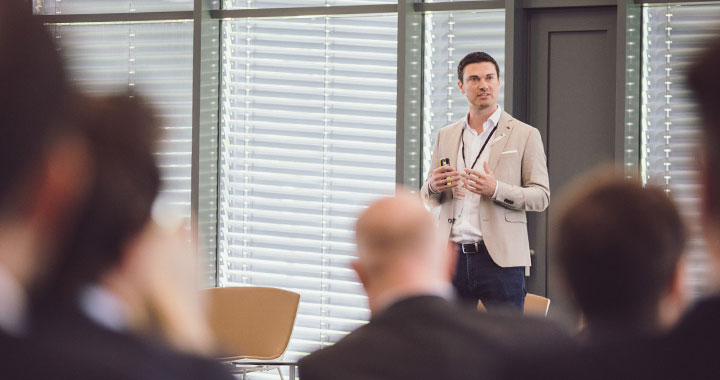
Wouldn’t it be a relief if your meeting rooms could recognise when a meeting ends early? As things stand, nobody can use the room as long as the booking is still in place. Intelligent buildings, on the other hand, can recognise the change and automatically make the room available again. Smart building is the keyword and AI plays a decisive role here. This is not merely about digitalisation of office space, but rather the intelligent networking of entire buildings. Modern sensor technology for the Internet of Things (IoT) makes it possible to use spaces more efficiently, conserve resources and improve the working environment for employees at the same time.
For instance, charging stations for electric cars, work areas or meeting rooms can all be booked via a central platform. Sensors detect when a resource is no longer in use and release it again fully automatically. The entire building interacts with your employees and adapts to them and the things they do. This saves energy, reduces costs and improves the user experience. At the same time, sustainability becomes measurable – a decisive factor, especially for corporate entities.
Digital Employee Experience as a new success factor.
All these developments contribute to one major, cross-departmental topic: the digital employee experience. This describes the sum of all digital touchpoints that employees experience in your company – from recruitment to onboarding to daily work and culminating in offboarding when they eventually leave the organisation.
AI can also play a key role here. It has the potential to streamline processes, enhance information accessibility and optimise system interactions through intuitive design. This can be illustrated by the provision of quick answers to simple questions or taking action based on the current context. A prime example is booking a meeting room. What used to require several clicks, and even different systems, can now be automated and optimised by AI – including releasing the room if a meeting ends early.
HR and IT: collaborating for a more intelligent working environment.
Close collaboration between the individual departments in the company is required for the measures to develop their full potential. In this context, HR and IT have key roles. The requirements of employees must be understood, implemented technically and developed continuously. The challenge here is to establish a common language so that everyone understands each other and can work together as equals.
In many companies, so-called change management or transformation offices take on this intermediary role. They ensure new technologies are not only introduced, but also structured, coordinated and firmly anchored. This can be done through training and the provision of information and instructions that facilitate the adoption of new possibilities. Only when employees experience and understand the benefits of AI can it become an integral part of the corporate culture.
Merely prioritising AI is insufficient on its own!
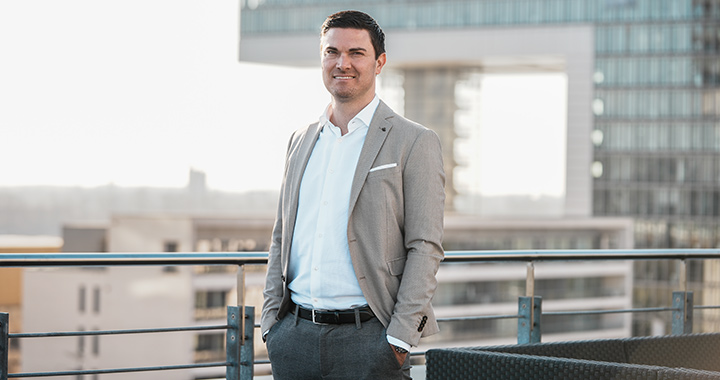
For Christian Malzacher, one thing is clear: “It is very important that top management not only makes AI a top priority but also creates the structures to really bring the topic to life in the company.” It is insufficient simply to put AI on the agenda. It is crucial to define the necessary roles, clarify responsibilities and actively support implementation.
Bechtle is setting a great example here. As “Customer Zero”, the company first tests new AI solutions in-house, gathers experience and passes this knowledge on to its customers. Regardless of the size of your company, it is crucial to have a reliable partner who can provide expert advice and assistance with implementation and operation.
The positive news is that companies of all sizes can now benefit from AI, smart building technology and digital employee experience. Small and medium-sized companies can also benefit from the advantages, provided they have a partner to accompany them on their journey. Bechtle is able to support businesses of all sizes as a sparring partner, coordinator and initiator, as well as during implementation and operation.
Conclusion: Act now to be successful tomorrow.
The world of work is changing, with artificial intelligence and employee experience being the key drivers. Companies that act now will establish the foundations for a productive, efficient and attractive working environment. However, the focus remains on people, supported by technologies that enable them to realise their full potential and enhance your company’s productivity and efficiency.
Then please contact us at the following e-mail address. Our experts will then get in touch with you.