
Bechtle Cybersecurity
Holistic protection for your business.
Cybersecurity is more than just technology. Real resilience comes from the interplay of people, processes and technical safeguards. With more than 600 certified specialists across Europe, Bechtle provides a fully integrated, vendor‑neutral security portfolio that scales to your needs. Our approach combines prevention, detection and response to ensure your digital infrastructure is reliably protected—both today and in the years ahead.
The seven pillars of cybersecurity.
Explore the essential building blocks of a resilient security strategy:
Security aligned with regulations and standards—from NIS2 to supply chain security.
A resilient technical foundation built on Zero Trust, cloud security and holistic design principles.
Protect networked production and IoT environments throughout their entire lifecycle.
Security built in from the ground up with DevSecOps, secure coding and SBOM.

Empower employees through awareness, security culture and identity security/IAM.
24/7 monitoring in the SOC, plus incident response, forensics and penetration testing.

Cybersecurity benefits at a glance:
Regulatory confidence.
Stay compliant with requirements such as NIS2, the CRA, the AI Act, DORA and more.
Comprehensive cyber resilience.
From prevention through to response, every security discipline working seamlessly together.
Address the skills gap.
Training, awareness and managed services that relieve the burden on your teams.
Clear visibility into risks.
Supported by defined guidelines, responsibilities and processes.
Bechtle 24/7 emergency contact.
Your data has been encrypted? Need fast support after a cyberattack? Our Incident Response and IT forensics teams are backed by more than 30 regional security teams and are available around the clock.
Bechtle Cyber Defence Concept – Holistic protection.
A holistic security approach goes far beyond technology. It brings people, processes and technologies together to create a resilient defence framework that continually evolves.
Our approach covers every phase of cyber security:
- Prevention – Minimising risks, empowering employees and securing systems
- Detection – Identifying threats automatically and at an early stage
- Response – Acting swiftly and decisively in the face of an attack
- Contingency planning – Maintaining the ability to act when it matters most
The result? A resilient IT infrastructure, ready for attacks and able to recover quickly.

Bechtle Cyber Security provides one of the most extensive end‑to‑end portfolios on the market—from prevention and detection through to response, contingency planning and recovery. It’s available as a managed service if required, and as always, everything’s from a single source.
Mathias Schick, Business Manager IT Security
Security assessments – The ideal starting point.
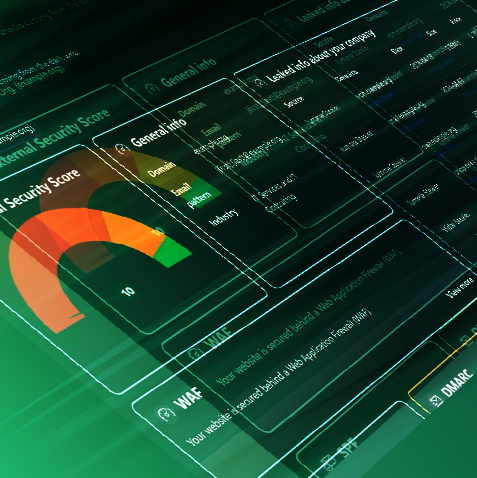
Our security assessments give you a clear overview of your current security posture along with targeted recommendations for your next steps.
Quickly find out whether company data has appeared on the darknet—a straightforward first step in managing cyber risk.
*Required field
If you’d like to know more about how we handle your personal data, please read our Privacy Policy.
Frequently asked questions on cybersecurity.
Holistic cybersecurity looks beyond technology alone. It focuses on how people, processes and technologies work together to create a stronger overall defence. Bechtle integrates prevention, detection, response and contingency planning into one coherent cyber defence approach. The aim is simple—robust cyber resilience, so your IT infrastructure can not only withstand attacks but recover quickly. This includes governance and compliance, security architecture, OT/IoT security, human‑centric security, security operations and physical security.
The seven pillars organise a cybersecurity strategy into clearly defined disciplines—GRC, security architecture, OT and IoT security, secure software development, human‑centric security, physical security and security operations. They help organisations cover every relevant area—from policies and processes to technical architecture, employees and 24/7 monitoring—in a structured and consistent way. The result is a scalable, vendor‑neutral security framework that can be adapted to individual requirements and industry standards such as NIS2 or DORA.
In an acute situation—such as encrypted data or an active attack—you can contact the Bechtle 24/7 emergency line directly. A single phone number and email address put you straight through to our incident response and IT forensics specialists, who assess the situation, initiate immediate countermeasures, support containment and recovery, and document the incident forensically. With more than 30 regional security teams across Europe, Bechtle ensures fast local response and decisive action. This helps organisations gain crucial time, minimise damage and return to normal operations in a controlled, orderly manner.
Security assessments are ideal for gaining a clear picture of your current cyber security posture.
-
The B‑Hard Security Assessment determines your organisation’s security maturity level based on ISACA standards.
-
The NIS2 Assessment evaluates how well your organisation is prepared for regulatory requirements.
A darknet scan reveals whether any company data has already appeared on the darknet. Based on the findings, you’ll receive specific recommendations, a clear set of priorities and a solid basis for your ongoing security roadmap.
Many organisations struggle with limited security resources, which is why Bechtle combines training, awareness initiatives and managed services. Human‑centric security boosts employees’ security awareness, while identity security and IAM help reduce attack surfaces. At the same time, Security Operations Centres (SOC), incident response teams and other managed security services can take on selected operational tasks to ease the load on internal teams while still providing a comprehensive, 24/7 cyber defence framework—spanning everything from prevention to forensics.
Bechtle treats AI systems as part of the wider IT architecture and integrates them into established security and compliance processes. This includes clear policies for handling sensitive data, access and role concepts, technical safeguards and monitoring across office and production environments. Within Governance, Risk and Compliance (GRC), requirements such as the CRA and the AI Act are fully integrated. The goal is simple: to unlock the potential of AI securely—without risking loss of control over data, models or processes.