

Aerial view of a city with a virtual network above it

Digital transformation for the public sector – Practical solutions for real-world challenges.

Public authorities today face a unique mix of pressures. Demographic change and migration, climate change, constrained resources and rising expectations around digital public services are all converging at once. Smart technologies are essential to meeting these challenges. Yet progress is often slowed by structural barriers such as limited capacity for innovation, fragmented solution landscapes, complex procurement processes and a shortage of specialist skills. This is where our approach comes into play, with a four-pillar digitalisation portfolio specifically tailored to the requirements of the public sector.

Get innovation back on track with Bechtle.

Get in touch

Our digitalisation portfolio for the public sector.

A hand is holding a smart house

Process automation.

Reduce repetitive tasks and strengthen administrative capacity.

No-code technologies and robotic process automation (RPA) enable public-sector organisations to automate administrative workflows quickly, without the need for additional development effort. This frees up time, reduces errors and provides tangible relief in day-to-day operations.
A woman setting up smart home

Smart infrastructures.

Connect data to manage buildings, energy and the environment more effectively.

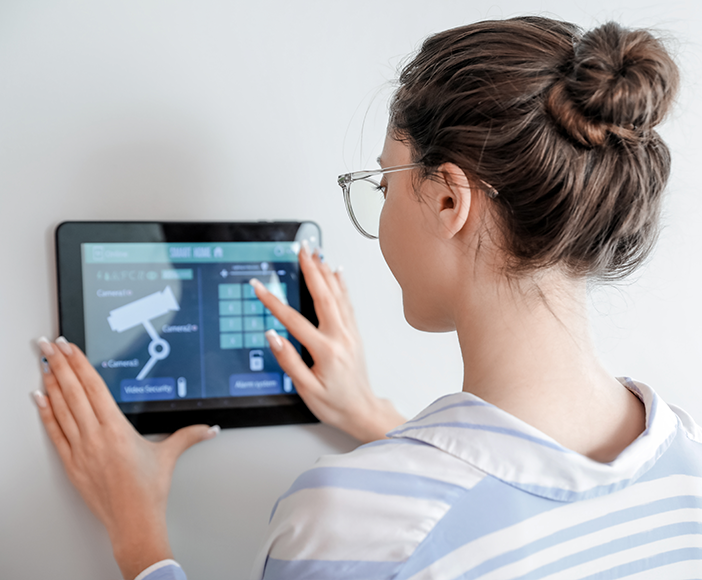
Connected sensors, IoT-enabled devices and platforms, and communication technologies such as LoRa generate real-time data across buildings, transport and environmental systems, enabling better-informed decisions and more efficient, sustainable infrastructure management.

Chatbot

Artificial intelligence.

Structure knowledge and empower staff with artificial intelligence.

Artificial intelligence supports public-sector organisations in analysing documents and working with large volumes of data more efficiently. Information can be structured, compared and evaluated consistently, creating transparent processes and clear insights into complex situations. AI also opens up new and efficient ways to communicate with citizens, for example through chatbots.

A woman using VR glasses

Virtual environments.

Improve understanding of complex issues through immersive virtual reality.

Virtual reality is transforming training, citizen engagement, planning and transparency by making complex content easier to convey and experience. The result is communication that is efficient, scalable and cost-effective.


Discover now

We support the digital transformation of the public sector for the benefit of people and the environment. Our approach is pragmatic and collaborative, supporting projects from the initial idea through to implementation and operation of future‑ready solutions. In many cases, this can even be done without the need for a new tender.

Andreas Ueckert, Head of Smart City & eGov.

Benefits of a targeted digital transformation.

Governance Icon

Independent advice.

We support our customers throughout their digital transformation, with services tailored to where they are in their journey. For organisations at an early stage, we offer orientation workshops and strategic advice on areas such as artificial intelligence, automation, IoT, virtual reality and smart cities. Local authorities with a more advanced level of digitalisation benefit from support in identifying suitable use cases and planning implementation. Where this groundwork is already in place, we can also take on the implementation and operation of intelligent solutions and develop strategies for further expansion.

Individual development path Icon

Comprehensive portfolio.

Our consulting and solutions portfolio combines the expertise of Bechtle’s specialist units with the know-how of more than 30 technology partners. With over 40 services and solutions, we offer both configurable modules and complete end-to-end packages.

Customer Icon

Central coordination.

As both coordinator and delivery partner, we provide local authorities with seamless project management across consulting, design, implementation and operations throughout their digital transformation. Even in complex, multi-project environments, customers benefit from efficient delivery across all project phases, supported by a single, central point of contact. 

Goal Icon

Innovation without the need for new tenders.

With numerous framework agreements in place at federal and state level in Germany, public authorities can often begin their digital transformation immediately. This reduces the time required for planning and delivery and gives you access to tailored services that can be procured without launching a new tender.

From idea to implementation and ongoing operation.

Eye visible Icon

Market assessment and strategy.

Which solutions best fit our requirements?

Arrow icon
Company pension plan Icon

Concept development and solution design.

How should the solutions be structured?

Arrow icon
SLA Icon

Tendering and procurement.

How do we specify our requirements properly—and is a tender even necessary?

Arrow icon
Managed Services Icon

Roll-out, integration and operations.

Who coordinates roll-out and ongoing operations across multiple solutions and delivery streams?

From the initial idea to implementation, projects often take one to two years. With our end‑to‑end approach and framework agreements tailored to specific requirements, Bechtle can deliver projects in less than three months. You can start with an analysis workshop to gain a clear initial picture of areas such as artificial intelligence, automation, IoT and virtual reality—or move straight into the operation of a solution environment. Our digital transformation portfolio builds on proven, practice‑ready use cases that deliver real value for the public sector and are available for immediate deployment.

Let’s move forward together.

Start your digital transformation today and work with us to shape a future‑first, sustainable and liveable community. Whether you represent a small town, a major city or a district authority, a municipal enterprise, an IT service provider or a state‑level authority, get in touch for an initial, no‑obligation conversation.

Customer stories.

DATEN:RAUM:Freiburg.
Pilot project – Virtual citizen dialogue.
Requirements workshop – Urban Data Platform
Requirements workshop – Smart document analysis.
Visitor frequency analysis – City of Emmendingen.
Smart Rottenburg.
DATEN:RAUM:Freiburg.
Freiburg image

Linking data, unlocking potential, and taking urban development to the next level. The smart city model project DATEN:RAUM:FREIBURG links and analyses data from a wide range of sources to provide a foundation for innovative applications. The goal is to establish a robust data infrastructure that turns mobility, population, climate, and environmental data into actionable insights. Bechtle led the consortium and, using an agile project approach and extensive expertise, delivered two concrete use cases—live traffic data and a digital marketing platform—to demonstrate how a smart city works today. ​
Learn more

Pilot project – Virtual citizen dialogue.
German city Aalen image

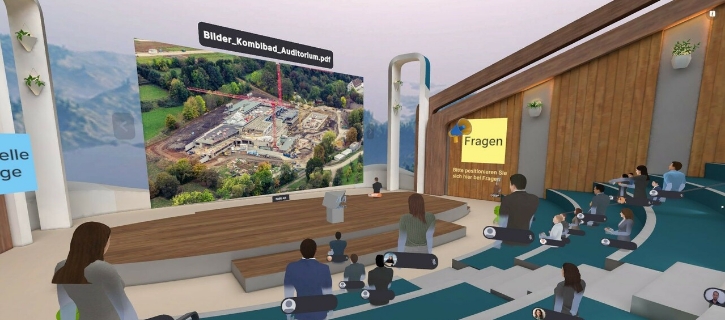
Together with Bechtle, the City of Aalen organised a virtual citizen dialogue in the metaverse. Representatives of the city administration and the architect of a new public swimming pool took part and answered questions from residents. Participants could join either via virtual‑reality headsets or using their own devices. The event created a direct exchange between the administration and the local community and provided clear information about the planned construction project.
Learn more

Requirements workshop – Urban Data Platform

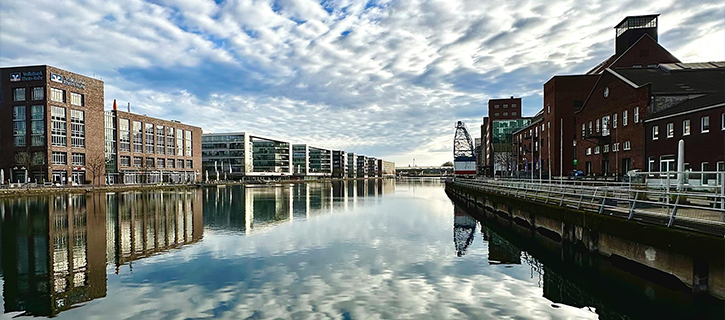
To address urban challenges more effectively and enable data‑driven decision‑making, the City of Duisburg is exploring the introduction of an Urban Data Platform (UDP). As part of this process, Bechtle facilitated an interdisciplinary requirements workshop, with technical support from Fraunhofer IESE. Participants included representatives from the city’s digital teams, operational departments, municipal enterprises and the local IT service provider. Together, they discussed the potential and challenges of an urban data platform, identified initial use cases and defined key technical and organisational requirements for the City of Duisburg’s UDP. The workshop created a solid foundation for preparing concrete, practice‑oriented development projects, including potential future use in an urban digital twin.

Requirements workshop – Smart document analysis.
German city image

In collaboration with the City of Duisburg, Bechtle conducted an automation workshop focused on AI‑based document analysis. The objective was to optimise document‑processing workflows through the use of artificial intelligence. The workshop examined use cases such as automated classification, data extraction and the management of large volumes of documents. The focus was on improving efficiency, reducing manual effort and developing AI‑supported solutions for sustainable automation.

Visitor frequency analysis – City of Emmendingen.
German city image

Bechtle analysed mobile network data for Emmendingen’s city centre to measure visitor frequency and generate actionable insights. The analysis examined visitor trends over recent years, assessed the impact of events in the city centre and compared opening hours with patterns of arrival and departure. Bechtle presented the results to representatives of the city administration as well as owners of retail and hospitality businesses, providing a data‑driven basis for optimising local offerings and events.

Smart Rottenburg.
German city image

Bechtle supported the City of Rottenburg in developing its smart city approach through stakeholder interviews, a design‑thinking workshop and the conceptual design of a digital platform. Following a market assessment, the project team evaluated and prioritised potential solutions and presented the results to the “Smart Rottenburg” working group. Bechtle then translated the selected concept into a concrete solution design, carried out a feasibility assessment and prepared a decision paper for the 2023 budget planning process. Ideas that were not prioritised were documented in a best‑practice list to support future projects.

Get in touch now and request your personal quote.

*Required field
If you’d like to know more about how we handle your personal data, please read our Privacy Policy.