
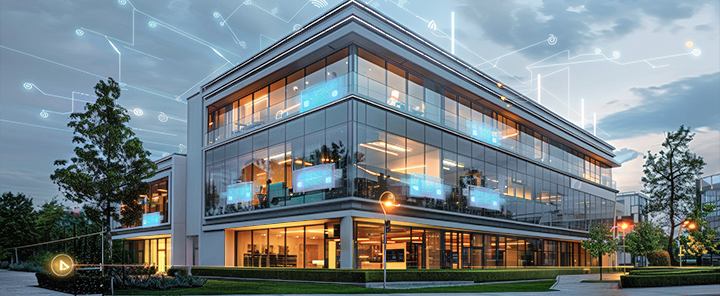
Greater efficiency through data-driven automation.
Collected data enables intelligent energy management, allowing the building to proactively adjust energy-intensive systems such as heating, ventilation, air conditioning and lighting. If a room is unoccupied or an area underused, this is automatically detected and energy consumption reduced accordingly. This lowers operating costs and improves sustainability.

in building operations and reliable data for better decision-making.

from a single source, including full plan-build-run services.

to support even the most complex rollouts, including millions of sensors.

and added-value use cases such as occupancy detection and asset tracking.

How do you make a building smart?
Making a building smart requires networks, sensors and platforms that are tailored to the specific needs of each use case. The platforms process large volumes of data and can also pinpoint locations with high accuracy. Multi-use case platforms are now gaining traction in the market. These are typically cloud-based platforms that collect and organise data from various applications and make it accessible to users through dedicated tools. Centralised data collection is especially useful when managing multiple buildings and distributed sites. In future, AI will play a greater role in enhancing this data and generating deeper insights.

Bechtle – Your partner for smart building transformation.
With IoT technologies becoming increasingly widespread—through networks, sensors and platforms—we support our customers in making their buildings smarter and more connected. As your lead integrator and single point of contact, Bechtle can manage your smart building project end-to-end, from initial consultation through integration to ongoing operation. We work with long-standing industry leaders such as infsoft, MEIDS and Xovis to combine hardware and software into a cohesive, future-ready solution, with services tailored to your organisation’s specific needs. Our portfolio includes network heatmapping, rollout planning, hardware procurement, security and connectivity services, sensor integration with your IoT platform, battery replacement and other on-site support.

Over 120 use cases across industries.
Requirements, sensor types and network setups vary widely depending on the organisation, sector and use case. With our broad portfolio, we’re equipped to deliver the right solution every time. We currently support over 120 use cases—helping our customers make their buildings smarter and more efficient. These include office buildings, retail spaces, warehouse and production facilities, as well as public buildings such as hospitals, airports and train stations, all the way to stadiums and ports. We bring together the right technologies, partners and expertise to turn your smart building plans into reality.
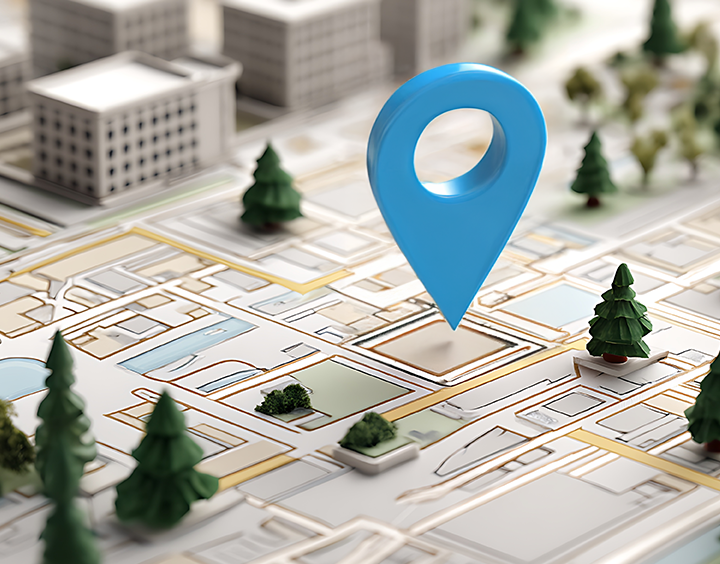
Time spent locating mobile assets such as tools, containers or vehicles can slow down your teams and reduce productivity. Asset tracking helps eliminate these inefficiencies using sensors—some as simple as adhesive paper tags—alongside networks based on Bluetooth Low Energy (BLE) or Ultra-Wideband (UWB). This enables precise tracking of mobile items, even across large production halls or building campuses.

With hybrid working now the norm, knowing how your spaces are used is more important than ever. Occupancy sensors let you analyse workspace usage and streamline desk booking. BLE sensors detect whether a booked desk or room is actually in use, while being fully compliant with privacy requirements. If not, the system automatically releases it for others to book.

A sensor-powered app shows cleaning staff which areas have been used and which haven’t, allowing them to adjust and optimise cleaning schedules. Cleaned areas are automatically logged in the system. This targeted approach improves overall facility standards, reduces time and materials spent on low-traffic zones, saves water and cleaning supplies, and boosts employee satisfaction. IoT transforms traditional route-based routines into demand-driven maintenance.
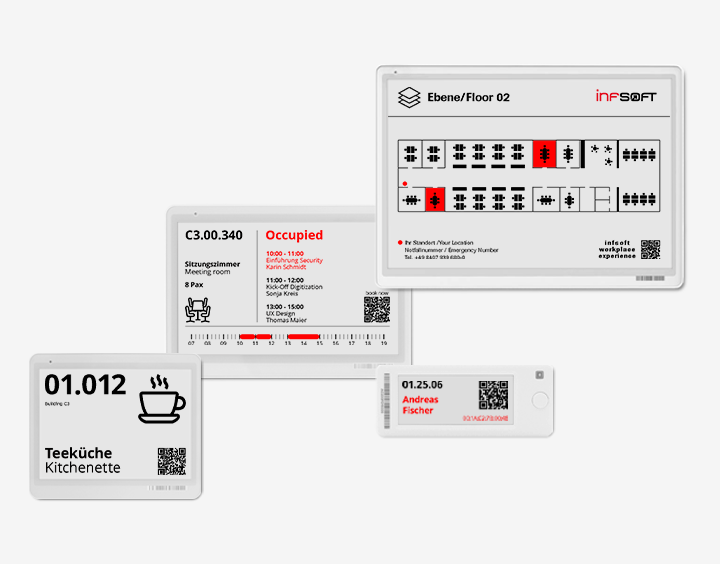
Digital signage lets you share up-to-date information with employees, customers and visitors. Available in a range of sizes, E-Ink displays are easy to install in a variety of locations—including meeting rooms, treatment areas, lockers and spare parts containers. Content is updated remotely, whenever needed. Their wireless setup makes them ideal for retrofitting in existing buildings, with batteries that last between three and five years. Available in a range of sizes, E-Ink displays are easy to install in a variety of locations—including meeting rooms, treatment areas, lockers and spare parts containers.

Whether in offices, airports or retail spaces, fluctuating footfall, queue management and evacuation risks pose major challenges for facility teams. People flow solutions can be a game changer. Ceiling-mounted sensors capture 3D images, analyse them using built-in AI, and send privacy-compliant metadata to a platform that visualises movement patterns. Dashboards provide live counts, trend data and threshold alerts, helping you adjust staffing levels, cleaning schedules and more. Our people flow solutions are available for both indoor and outdoor areas, as well as for transport environments such as trains and buses.
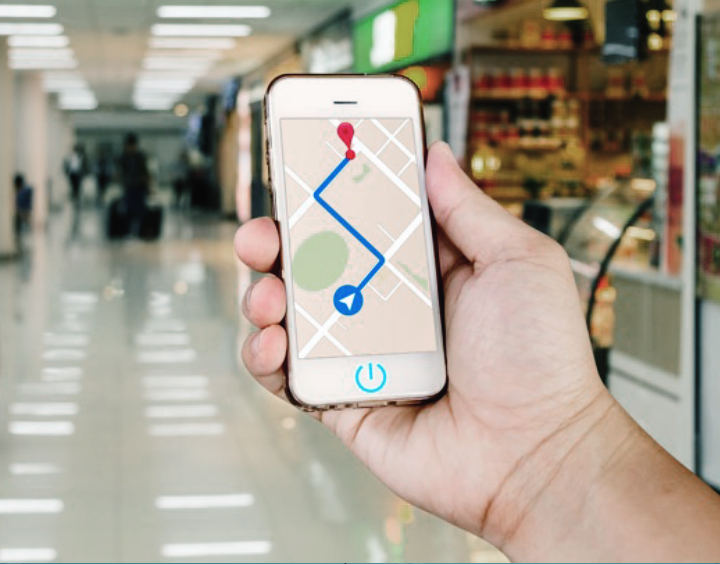
Indoor navigation helps employees, visitors, maintenance teams and suppliers find their way around more quickly—saving time and improving satisfaction. Positioning is enabled by Bluetooth beacons placed throughout the building, which communicate with a smartphone app. This allows people to navigate confidently through large office buildings, exhibition halls, shopping centres, airports, hospitals and more. Emerging technologies such as Ultra-Wideband (UWB) offer location accuracy of up to 15 centimetres.