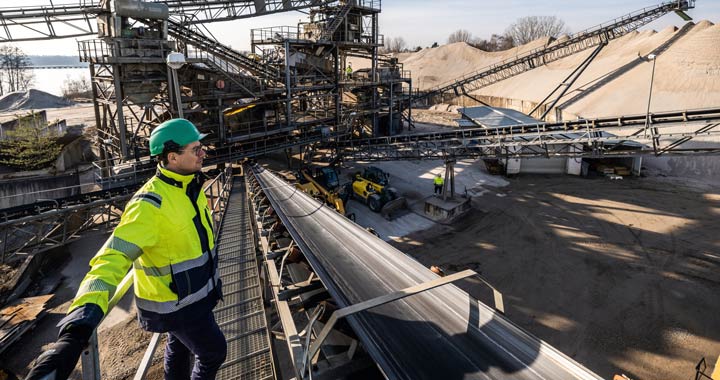
Gravel plant in Waghäusel

When cyberattacks hit, operations can grind to a halt. For many manufacturers, this is no longer an abstract risk—they have experienced the disruption first-hand. As attacks grow in number and sophistication, cybersecurity has become essential to keeping production running. Heidelberg Materials knows this challenge well. As Vice President of Technology, Christian Klaucke is responsible for the IT landscape of 130 cement plants, 600 quarries and 1,300 concrete plants worldwide. His top priority is a stable IT infrastructure that allows Heidelberg Materials to operate securely across all locations. Not an easy feat: “IT/OT security in our cement plants is a major challenge. Our infrastructures are not standardised or centrally managed. The cement business is highly local, and we’ve grown significantly through acquisitions over the years,” he explains. The result has been limited visibility across sites and no reliable way to manage individual locations centrally. That is now set to change. Klaucke is working towards a unified IT/OT platform that his teams can operate centrally from Brno, Czech Republic.
Key facts.

  • Project: Global standardisation of IT/OT environments and cybersecurity across industrial production.
  • Starting point: Locally grown, heterogeneous IT/OT infrastructures at international production sites.
  • Objective: Uniform hardware and platform standards with centralised operation.
  • Scale: Production sites in around 50 countries.
  • Impact: Higher security, better visibility, and greater scalability for automation and digital processes.

  • Implementation: Rollout including remote locations and infrastructure‑poor regions.
Yellow excavator

Global project requirements – An IT rollout spanning 50 countries.

That challenge led Christian Klaucke and his team to Bechtle: “We operate in around 50 countries. Some of our plants are located in very remote areas that are difficult to reach. You can’t simply ship hardware by post. Getting to the sites is often a challenge in itself, as there are no developed roads. We needed a partner who knows what they’re getting into, isn’t deterred by uncertainty—and can still deliver a cross‑continental IT infrastructure rollout within a reasonable timeframe.” Logistics and customs, in particular, require patience, expertise and a clear plan. Conditions differ widely from country to country, and the exact requirements are not always obvious from the outset. “There are only a few partners who can handle this,” Klaucke says. Working with Christian Reuer, Key Account Manager at Bechtle, Klaucke and his team defined the scope of the project: Over the next five years, 130 cement plants will be equipped with a standardised hardware bundle comprising four servers, three switches, two adapters and a storage system. Particularly critical sites will also be fitted with a disaster recovery option.
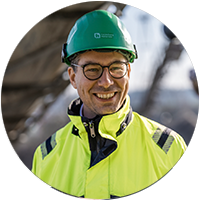
Christian Klaucke

Some of our plants are so remote, you simply can’t ship hardware by post.

Christian Klaucke, Vice President of Technology, Heidelberg Materials


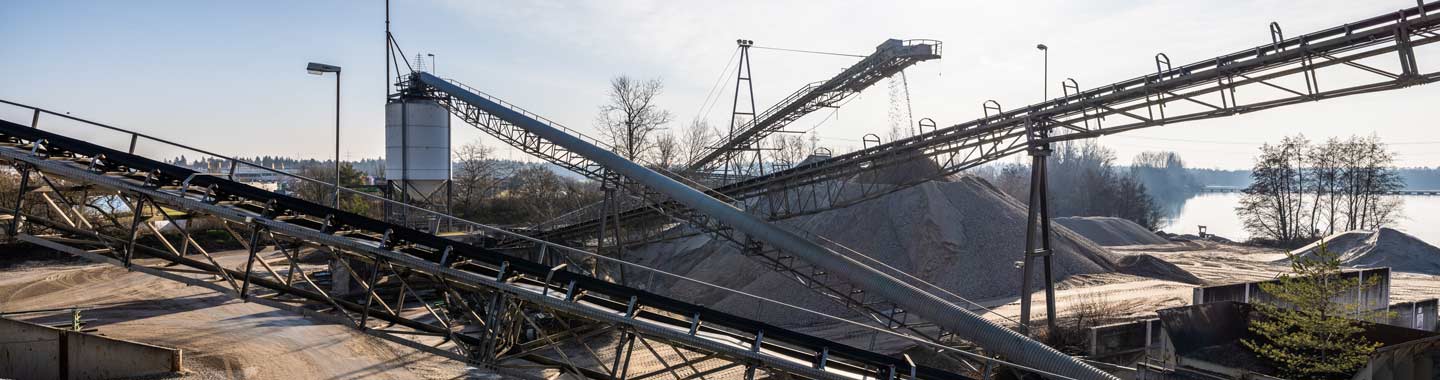
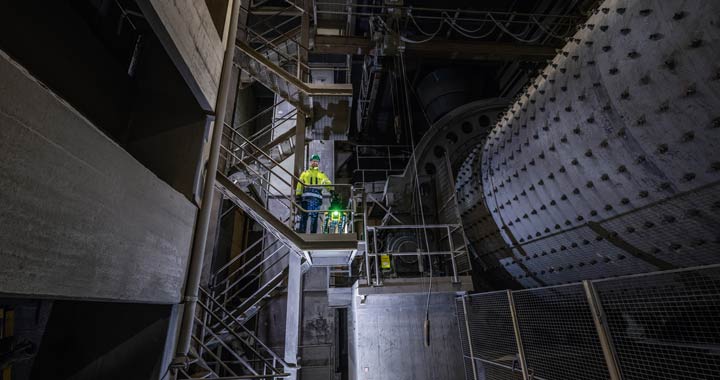
Gravel plant in Waghäusel
Heidelberg Materials quarry in Waghäusel, Germany.
Cement plant in Leimen

Operational execution – Logistics, customs and local conditions.

At its location in Bielefeld, Germany, Bechtle’s team has established a structured staging process to prepare all components for deployment at Heidelberg Materials. Every component is configured and validated before it ships out. This includes firmware upgrades, switch port configuration and server updates, as well as bundling the hardware into compact, ready‑to‑deploy units. Christian Reuer: “This ensures that standardised hardware arrives on site so the customer can just plug and play.” 

Then the rollout begins. “We started out with ambitious targets and planned to equip 40 plants per year with the new hardware,” Reuer recalls. But reality soon set in. “In Europe, we could’ve easily pulled that off, but in other regions, things often move at a different pace. Even with careful planning, progress can be slow.” The main bottleneck is customs clearance. “It’s something of a black box,” says Reuer. “Once a consignment enters the customs process, all we can often do is wait.”

Addressing country‑specific requirements is part of the expertise of the Bechtle International Division (BID). Among other things, the team ensures that export and customs processes are prepared correctly and in line with local regulations. Even so, in a project of this global scale, not every challenge can be anticipated. And when plans meet reality, it quickly becomes clear whether you have the right partner at your side, says Klaucke: “Planning and real‑world execution don’t always line up. When that happens, we don’t waste time looking for someone to blame. We focus on solving the problem together. That, to me, is what a true partnership looks like.”

Automation and digital processes built on a stable IT/OT infrastructure.

The new hardware has already been deployed at sites in Europe, Egypt, Morocco, Liberia and the United States. Benin, Burkina Faso and Greece are next on the rollout schedule, followed by India and Thailand. For Christian Klaucke, the standardised IT/OT platform is not only a key step towards stronger IT/OT security. It is also the foundation for greater automation and digital processes across production: “We’re facing a shortage of experienced operators. Technologies such as autonomous trucks and drones help us reduce our reliance on having people on site at all times.” In the United States, Heidelberg Materials is already using autonomous trucks in its quarries. To date, more than two million tonnes of material have been moved without a human driver.

Robotic dog Spot is also part of the automation strategy—and the newest team member at the cement plant in Leimen, Germany. During inspection rounds, Spot can access areas that are difficult or unsafe for people or drones to reach. The four‑legged robot is equipped with an array of sensors, including a thermal imaging camera to detect hotspots, as well as a microphone that picks up unusual noises, such as a rattling fan at the kiln. Based on its readings, Spot provides maintenance teams with the information they need. By taking over inspection rounds at night, Spot helps Heidelberg Materials address staffing constraints. As Klaucke emphasises: “If we want to deploy more automation and robotics, a reliable infrastructure is essential to ensure that processes run smoothly even at remote sites. Otherwise, digitalisation across our plants simply won’t scale. I need central visibility into the state of our infrastructure and the ability to respond quickly when needed." With its new platform, Heidelberg Materials is laying the groundwork for exactly that.

Teaser results magazine

results by Bechtle.

This article is an excerpt from the current print edition of results by Bechtle.

Please note that the magazine is only published in German.