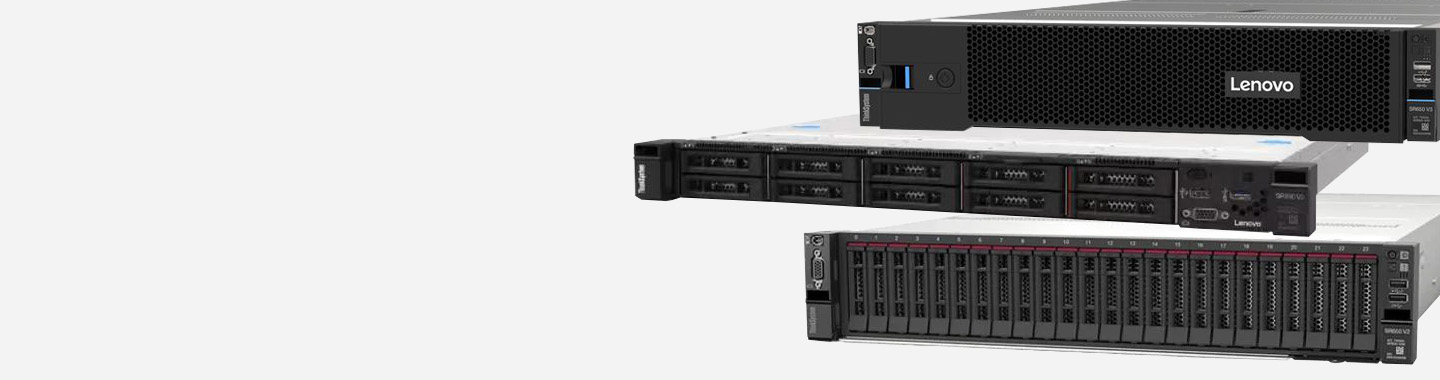
Lenovo rack servers.
Lenovo ThinkSystem rack servers provide a powerful, flexibly scalable foundation for virtualisation, cloud environments, AI workloads and mission‑critical applications. From compact 1U systems to high‑performance multi‑socket platforms, Lenovo rack servers scale with your requirements, delivering reliability, efficiency and long‑term readiness.
Why Lenovo rack servers?
Scalable architecture.
From compact 1U systems to multi‑socket platforms designed for mission‑critical workloads, Lenovo rack servers adapt easily to growing and changing requirements.

Performance for modern workloads.
Optimised for virtualisation, cloud, AI, databases and SAP environments, ThinkSystem servers offer high expandability and optional GPU support to handle demanding applications.

Reliability and security.
Integrated protection with Lenovo ThinkShield, combined with high availability powered by Predictive Failure Analysis and a resilient system architecture, helps safeguard critical operations.

Centralised management and efficiency.
Lenovo XClarity streamlines provisioning, monitoring and lifecycle management, reducing operational costs and simplifying IT processes across the data centre.

Single‑socket rack servers.
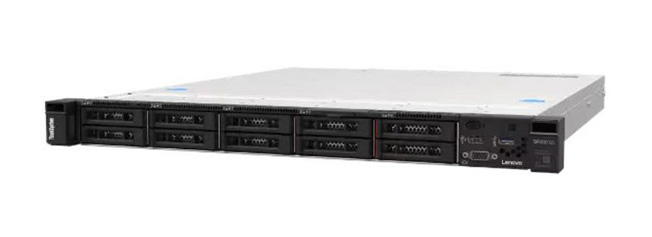
Compact 1U systems designed for smaller data centres, branch offices and edge‑adjacent deployments. Well suited to growing businesses that need a space‑efficient, energy‑efficient server platform without sacrificing performance.
Dual‑socket rack servers.
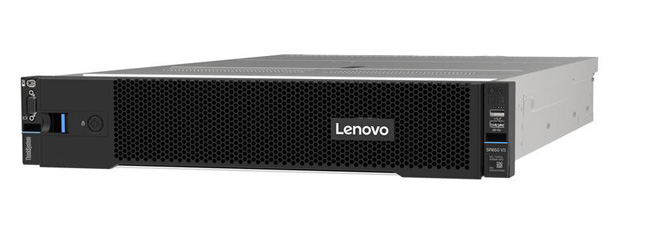
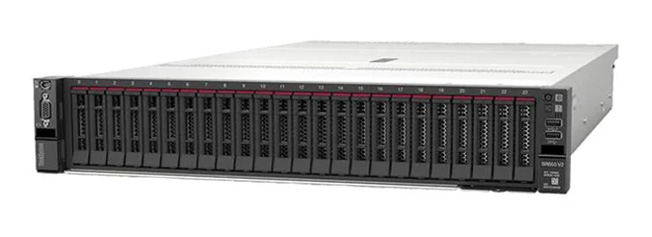
The backbone of modern data centre infrastructures. High scalability for virtualisation, cloud workloads, databases and AI applications, with flexible configuration options based on Intel® Xeon® or AMD EPYC™ processors.
Multi‑socket rack servers
Built for mission‑critical workloads with the highest demands on performance, availability and scalability, including SAP HANA, in‑memory computing and large‑scale analytics environments.
Intel or AMD – Flexible configuration options.
Lenovo ThinkSystem rack servers are available with either Intel® Xeon® or AMD EPYC™ processors, allowing systems to be tailored precisely to different requirements—from energy‑efficient standard workloads to high‑performance virtualisation, AI and database environments.
Intel‑based systems stand out for their broad enterprise certifications and stable platform architecture, while AMD EPYC™ processors excel in core‑dense and memory‑intensive workloads.
Across both processor platforms, management, security and scalability remain fully consistent within the ThinkSystem architecture.
Rack servers for specialised workloads.
Many demanding data‑centre scenarios rely on scalable rack architectures. Lenovo ThinkSystem rack servers provide a powerful foundation for performance‑intensive and highly specialised workloads.
GPU and AI servers.
High GPU density designed for AI, machine learning, simulation and data‑intensive workloads.
High‑performance computing (HPC).
Optimised for parallel processing, research, simulation and scientific applications.
Multi‑node architectures.
High core density in compact rack systems, ideal for scalable virtualisation and cloud environments.
Storage‑intensive enterprise systems.
Designed for in‑memory databases, large analytics workloads and mission‑critical applications.
SAP‑certified platforms.
Certified rack server platforms for SAP HANA and hybrid SAP landscapes.
Frequently asked questions about rack servers:
Lenovo ThinkSystem rack servers feature a scalable architecture that adapts easily to growing requirements, ranging from compact 1U systems to high‑performance platforms. Optimised for virtualisation, cloud, AI and database workloads, they deliver high reliability through integrated security features such as Lenovo ThinkShield and Predictive Failure Analysis. Centralised management with Lenovo XClarity streamlines lifecycle management and significantly reduces administrative overhead.
The platform supports a wide range of professional workloads, including virtualisation, cloud environments, AI models, databases, SAP landscapes and analytics scenarios. Specialised systems offer GPU acceleration for machine learning and simulation, HPC‑optimised architectures for scientific computing, and storage‑intensive configurations for in‑memory databases and large‑scale analytics.
Single‑socket servers are compact and energy‑efficient, making them ideal for smaller data centres or edge‑adjacent deployments. Dual‑socket servers form the backbone of modern data‑centre environments, combining high scalability with extensive configuration options. Multi‑socket systems are designed for maximum performance and are typically used in mission‑critical scenarios such as SAP HANA, in‑memory computing and large analytics workloads.