

Why automation is more than just technology.
Technologies such as Infrastructure as Code and Policy as Code have become key components of modern infrastructure projects. They make it possible to deploy IT components in a repeatable, consistent and automated way—accelerating processes, reducing sources of error and significantly improving operational efficiency.
Some of the core technical concepts include:
- Infrastructure as Code: IT infrastructure is defined in code, versioned and deployed automatically—increasing transparency and reusability.
- Policy as Code: Security and compliance policies are also written as code and automatically enforced or validated.
- Blueprints and standards: Predefined architectural guidelines help ensure consistency across projects and teams.

Automation only reaches its full potential when cultural and organisational aspects are taken into account. Three key levels work together:
- 1. Cultural change: Concepts like DevOps, FinOps and BizOps introduce new ways of working. They promote cross-functional collaboration and shared responsibility across team boundaries.
- 2. Organisational requirements: Clear goals, realistic expectations and well-defined processes provide direction and accountability, especially important in complex environments with many interfaces.
- 3. Technological implementation: The solutions used should be modular, scalable and easy to integrate as this is the only way to ensure automation initiatives are sustainable and can evolve over time.
Automation is not just an IT project. It’s a holistic transformation process.
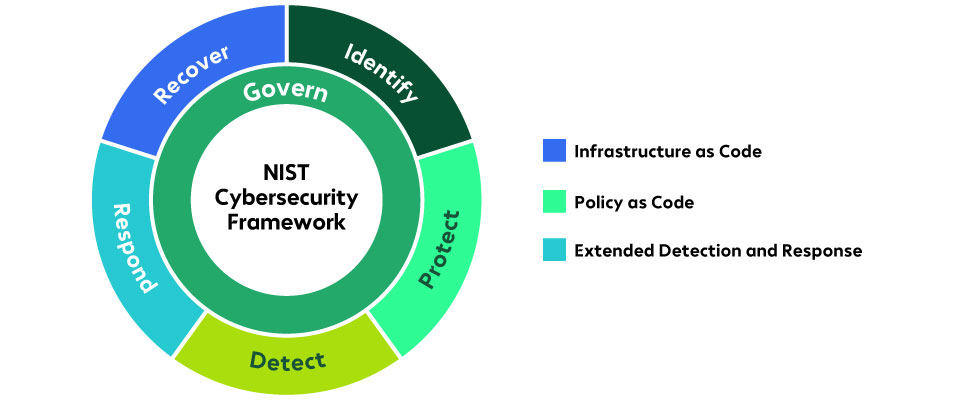

Everything as Code and AI-driven processes.
A growing number of companies are moving beyond automating individual components and embracing a broader concept: Everything as Code. The goal is to translate not just infrastructure, but also processes, services and configurations entirely into code.
In future, AI-powered tools will play an increasingly important role, for example, in automated analysis, configuration or scaling of systems. Many of these concepts are still in the early stages, but those who start planning strategically and take the first steps today are laying the foundation for tomorrow’s IT.
Bechtle supports organisations of all sizes and industries on their journey towards automated infrastructure. From initial assessments and architecture blueprints to operational concepts, our experts offer proven, practical approaches.