The digital transformation of SMEs – Challenges, Potential and AI.
by Stefan Maurer
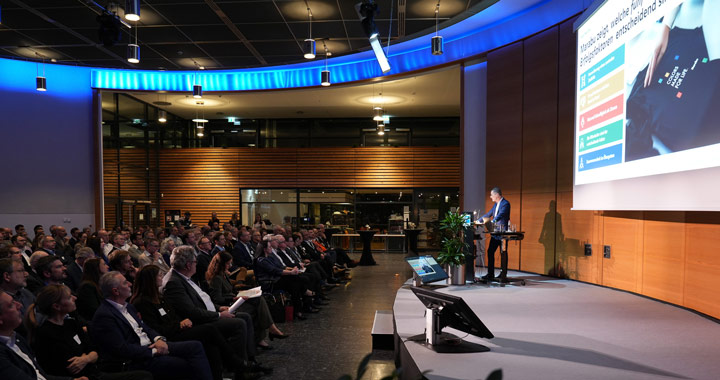
As part of its Denkanstöße event series, IHK Heilbronn‑Franken hosted a session at the end of last week exploring how AI and digital infrastructure are reshaping business models, with a particular focus on small and medium‑sized enterprises. More than 200 guests attended the event, which featured contributions from Bechtle CEO Dr Thomas Olemotz and Prof. Dr Thomas Hess, Director of the Institute for Digital Management and New Media at the LMU Munich School of Management and a member of Bechtle’s Supervisory Board. Together, they addressed the opportunities of decisive digital transformation, the disruptive potential of artificial intelligence, and insights from current research. Here are the key insights and takeaways.
Written by
E-Mail: stefan.maurer@bechtle.com
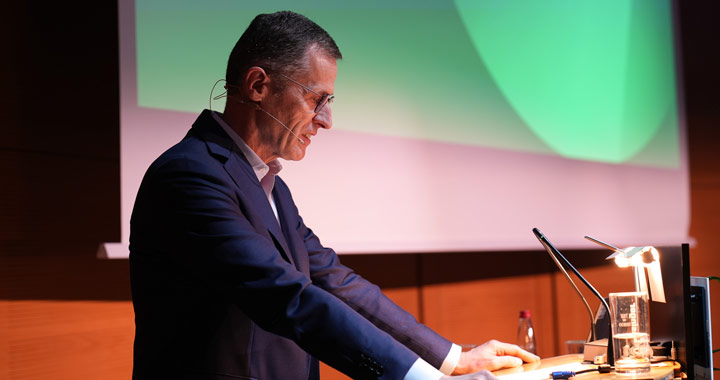
Dr Thomas Olemotz
Photo: IHK Heilbronn-Franken
For SMEs, digital transformation is no longer a theoretical debate or something that can be endlessly postponed. It is a business imperative if individual companies—and Germany as a place to do business—are to remain viable in the long term.
Dr Thomas Olemotz
Marabu is an outstanding example of the courage to do things differently and to fully embrace the potential of digital transformation—consistently and with conviction. The team behind it has understood one thing: today, digital excellence is just as important as chemical precision.
Dr Thomas Olemotz
Photo: IHK Heilbronn-Franken
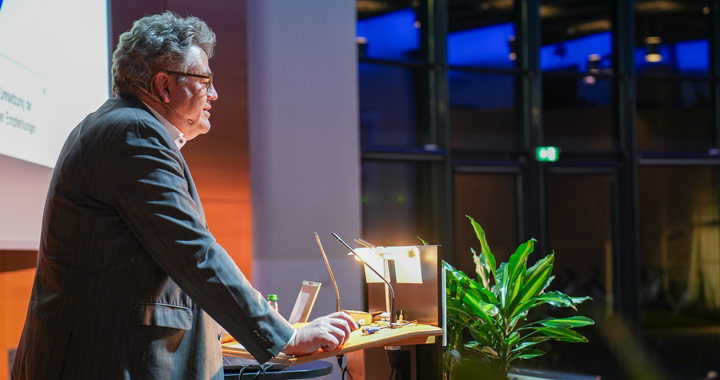
Prof. Dr Thomas Hess
Photo: IHK Heilbronn-Franken
Prof. Dr Thomas Hess also outlined five academically grounded theses, drawing on a study he conducted at LMU in collaboration with the Schick Foundation.
- Without a clear vision, digital initiatives become fragmented and lack impact
- Strong digital leadership delivers tangible value
- A digital mindset is essential
- Highly specialised IT reaches its limits in digital transformation
- Integration into supra‑regional ecosystems is essential
Successful digital transformation starts with a customer‑specific strategy that integrates AI with clear intent—from identifying relevant potential and defining meaningful use cases through to embedding them across the organisation. This is how long‑term competitiveness is secured: through the effective interaction of technology, processes and people.
Success requires bold steps. Without a clear direction, there is no real impact—and half‑measures simply do not work. What’s needed is a leader who drives the transformation forward, brings the necessary authority and investment, and succeeds in taking people with them.
Prof. Dr Thomas Hess