

Tech trends 2025: Between the pressure to innovate and practicality.
The technology landscape of 2025 is characterised by innovation drivers such as artificial intelligence, sustainability and hybrid working models. At the same time, there is a growing expectation that new technologies will not only be visionary, but also suitable for everyday use and practical application. Integration with existing IT structures – from devices and processes to security architectures – is becoming increasingly important.
According to the Boston Consulting Group, 73 per cent of companies surveyed worldwide plan to increase their investment in AI technologies this year. The focus is on increasing efficiency and developing new areas of application. One trend is becoming particularly relevant: ‘AI on Device’, i.e. the transfer of AI functionalities directly to end devices. According to the British market research and consulting company Canalys, over 100 million AI PCs are expected to be delivered worldwide by the end of 2025. Equipped with special neural processing units (NPUs), they enable AI tools to be deployed locally. This brings benefits in terms of data protection, energy efficiency and response time.
Sustainability is becoming an increasingly important issue. Manufacturers are increasingly focusing on recycled materials, energy-efficient components and modular hardware that facilitate repairs and extend service life. The aim is to combine environmental responsibility with economic efficiency.
At the same time, the demands placed on technical equipment in the hybrid working environment are increasing. Devices that are mobile, powerful, compatible and centrally manageable are in demand. This is the only way to strike a balance between flexibility for employees and security for IT.

Which products meet the requirements of these developments?
Many manufacturers are responding to these trends with new devices that are specifically designed to meet today’s requirements. Not every new product is revolutionary – but some are setting new technical and functional standards; they make artificial intelligence available directly on the device, they enable high-performance mobile working without compromises, and they focus on sustainability and modularity.
We have put together a selection of devices that put these technological developments into practice. They show how trends such as AI, energy efficiency and modularity can be utilised today.
Trend 1:
AI on the device – when computing power becomes local.
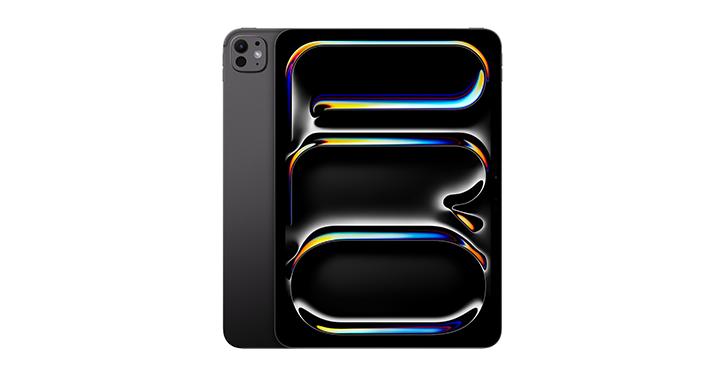
Apple iPad Pro 11’ (M4).
The new iPad Pro 11’ features the M4 chip, which offers a 16-core neural engine capable of up to 38 trillion operations per second. This performance makes it possible to perform AI functions such as text recognition, image editing and video effects directly on the device. The device has an Ultra Retina XDR display with Tandem OLED technology for high brightness and contrast. Combined with the new Apple Pencil Pro and the redesigned Magic Keyboard, the iPad Pro is ideal for creative professionals and mobile working. (Product page only available in German.)
Apple iPad Pro 11’ (M4).
The new iPad Pro 11’ features the M4 chip, which offers a 16-core neural engine capable of up to 38 trillion operations per second. This performance makes it possible to perform AI functions such as text recognition, image editing and video effects directly on the device. The device has an Ultra Retina XDR display with Tandem OLED technology for high brightness and contrast. Combined with the new Apple Pencil Pro and the redesigned Magic Keyboard, the iPad Pro is ideal for creative professionals and mobile working. (Product page only available in German.)
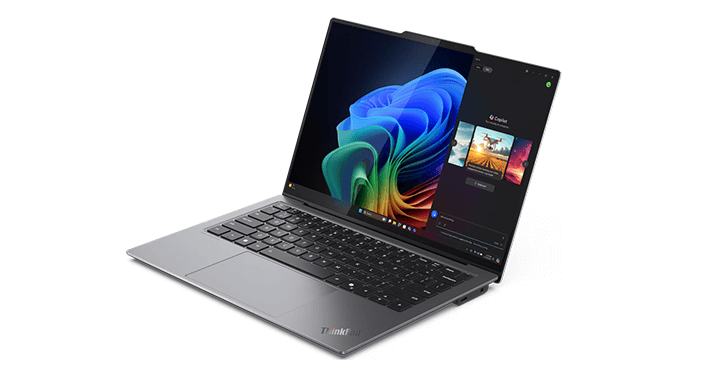
Lenovo ThinkPad X9.
The ThinkPad X9 Gen 1 series is powered by Intel® CoreTM Ultra processors with an integrated NPU that enables basic AI functions such as speech processing or image optimisation right on the device. Sustainability has also been taken into account: Lenovo has chosen a chassis made from recycled aluminium and a modular design for easy repair. This makes the notebook suitable for professional use with a focus on efficiency, durability and AI support. (Product page only available in German.)
Lenovo ThinkPad X9.
The ThinkPad X9 Gen 1 series is powered by Intel® CoreTM Ultra processors with an integrated NPU that enables basic AI functions such as speech processing or image optimisation right on the device. Sustainability has also been taken into account: Lenovo has chosen a chassis made from recycled aluminium and a modular design for easy repair. This makes the notebook suitable for professional use with a focus on efficiency, durability and AI support. (Product page only available in German.)
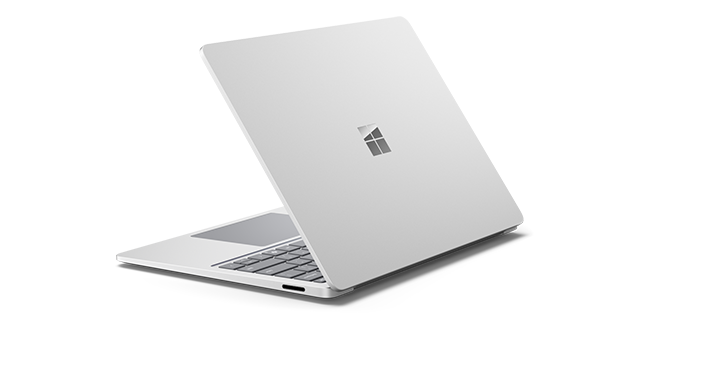
Microsoft Surface Laptop Copilot+ PC (7th generation).
The Surface Laptop Copilot+ is part of a new class of device with an integrated NPU, Snapdragon® X processor, and the Microsoft Copilot AI assistant to run AI functions such as Windows Studio Effects locally on the device. The Recall function has been announced but will be disabled at launch. The device is suitable for users who want to seamlessly integrate AI functions into their daily work.
Microsoft Surface Laptop Copilot+ PC (7th generation).
The Surface Laptop Copilot+ is part of a new class of device with an integrated NPU, Snapdragon® X processor, and the Microsoft Copilot AI assistant to run AI functions such as Windows Studio Effects locally on the device. The Recall function has been announced but will be disabled at launch. The device is suitable for users who want to seamlessly integrate AI functions into their daily work.
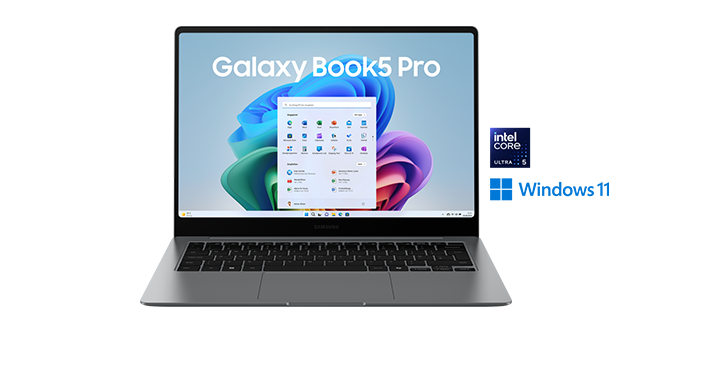
Samsung Galaxy Book5 Pro.
The Galaxy Book5 Pro series combines an Intel® CoreTM Ultra processor with an integrated NPU and supports local AI functions such as Galaxy AI and Microsoft Copilot. In conjunction with Samsung DeX, the device can be used flexibly between Windows and Android systems, supporting users who use both platforms in their daily lives. An OLED display with high colour fidelity and a slim design also makes it a versatile solution for productive and creative work.
Samsung Galaxy Book5 Pro.
The Galaxy Book5 Pro series combines an Intel® CoreTM Ultra processor with an integrated NPU and supports local AI functions such as Galaxy AI and Microsoft Copilot. In conjunction with Samsung DeX, the device can be used flexibly between Windows and Android systems, supporting users who use both platforms in their daily lives. An OLED display with high colour fidelity and a slim design also makes it a versatile solution for productive and creative work.
Trend 2:
Efficiency and connectivity.
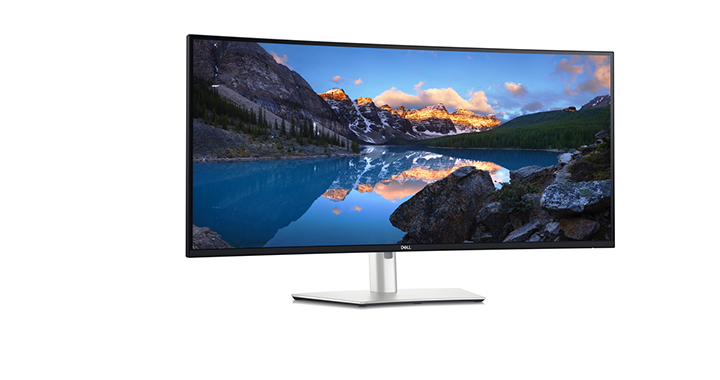
Dell UltraSharp U4025QW Curved Monitor.
With a 40-inch screen diagonal, 5K resolution and Thunderbolt 4, the U4025QW offers not only a large work surface but also a high level of connectivity. With up to 140 watts of charging power, you can power your notebooks directly without the need for an additional power supply. With DisplayPort, USB-C, Ethernet and a KVM switch, this monitor is ideal for workstations where efficiency, connectivity and flexibility are key.
Dell UltraSharp U4025QW Curved Monitor.
With a 40-inch screen diagonal, 5K resolution and Thunderbolt 4, the U4025QW offers not only a large work surface but also a high level of connectivity. With up to 140 watts of charging power, you can power your notebooks directly without the need for an additional power supply. With DisplayPort, USB-C, Ethernet and a KVM switch, this monitor is ideal for workstations where efficiency, connectivity and flexibility are key.
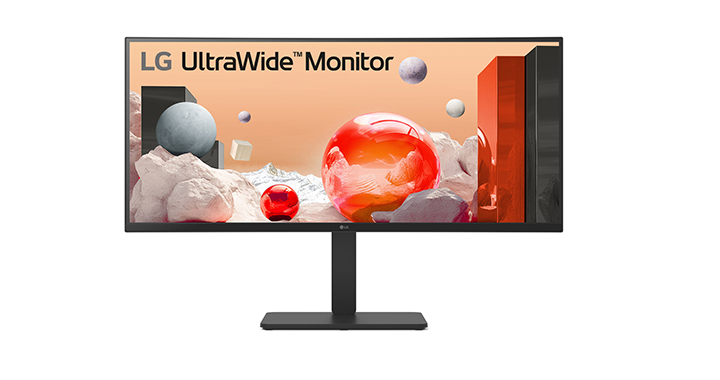
LG 34BA85QE-B Curved Monitor.
A 34-inch 21:9 UWQHD (3,440 × 1,440 pixels) monitor with curved display and integrated Full HD webcam and including Windows Hello. HDMI, DisplayPort, USB-C with up to 90 W charging power, Ethernet, a KVM switch and USB hub provide a wide range of connectivity options. The monitor brings key functions to the desktop, helping to create a more efficient working environment – especially where video conferencing, device switching and multitasking are commonplace.
LG 34BA85QE-B Curved Monitor.
A 34-inch 21:9 UWQHD (3,440 × 1,440 pixels) monitor with curved display and integrated Full HD webcam and including Windows Hello. HDMI, DisplayPort, USB-C with up to 90 W charging power, Ethernet, a KVM switch and USB hub provide a wide range of connectivity options. The monitor brings key functions to the desktop, helping to create a more efficient working environment – especially where video conferencing, device switching and multitasking are commonplace.
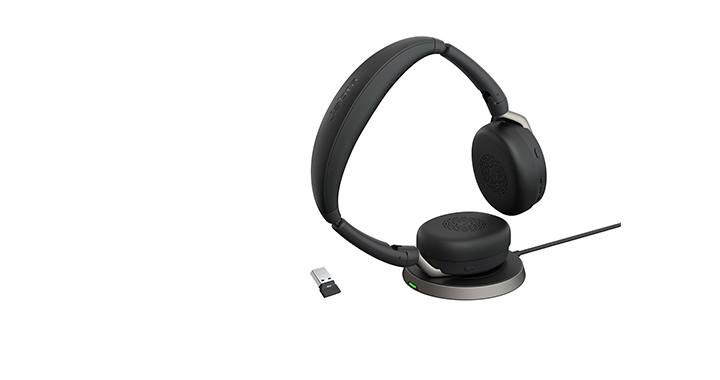
Jabra Evolve2 65 Flex MS USB-C headset.
A foldable Bluetooth headset designed for mobile use and hybrid work environments. It features active noise cancellation, ClearVoice microphone technology for voice isolation and AirComfort padding for comfort. The supplied charging station also powers smartphones when needed for flexible use on the move or in the home office.
Jabra Evolve2 65 Flex MS USB-C headset.
A foldable Bluetooth headset designed for mobile use and hybrid work environments. It features active noise cancellation, ClearVoice microphone technology for voice isolation and AirComfort padding for comfort. The supplied charging station also powers smartphones when needed for flexible use on the move or in the home office.
Trend 3:
Sustainability meets infrastructure.
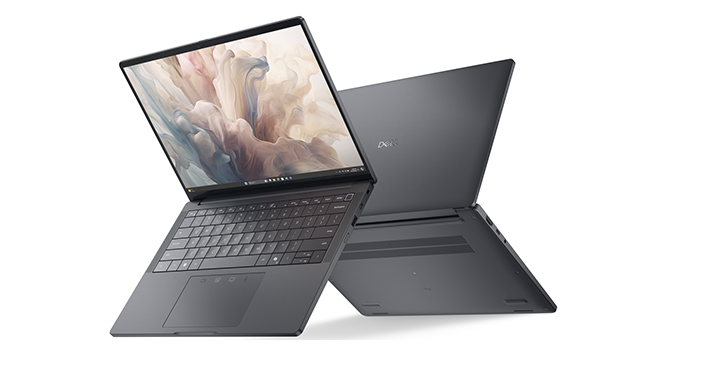
Dell Pro Premium notebooks.
On select models of the new Pro Premium series, Dell uses screw-mounted, modular USB-C ports. These can be replaced individually if necessary, reducing repair times and extending the life of the device. The notebooks also offer a wide range of connectivity options. This combination of easy repair and extensive connectivity makes the devices highly sustainable.
Dell Pro Premium notebooks.
On select models of the new Pro Premium series, Dell uses screw-mounted, modular USB-C ports. These can be replaced individually if necessary, reducing repair times and extending the life of the device. The notebooks also offer a wide range of connectivity options. This combination of easy repair and extensive connectivity makes the devices highly sustainable.
The selection shows how technological innovation and usability are becoming increasingly intertwined. AI functions are moving into end devices, sustainable concepts are reaching mass production and displays and sensors are taking on new infrastructure roles. Thinking about new technologies in conjunction with existing structures lays the foundation for a resilient and future-ready IT landscape.