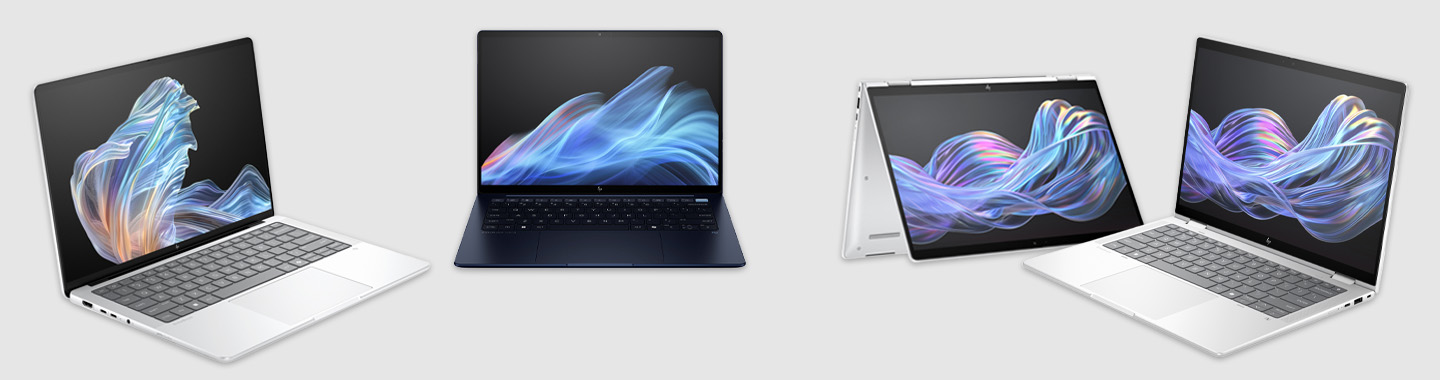

HP business laptopsfor modern working environments.
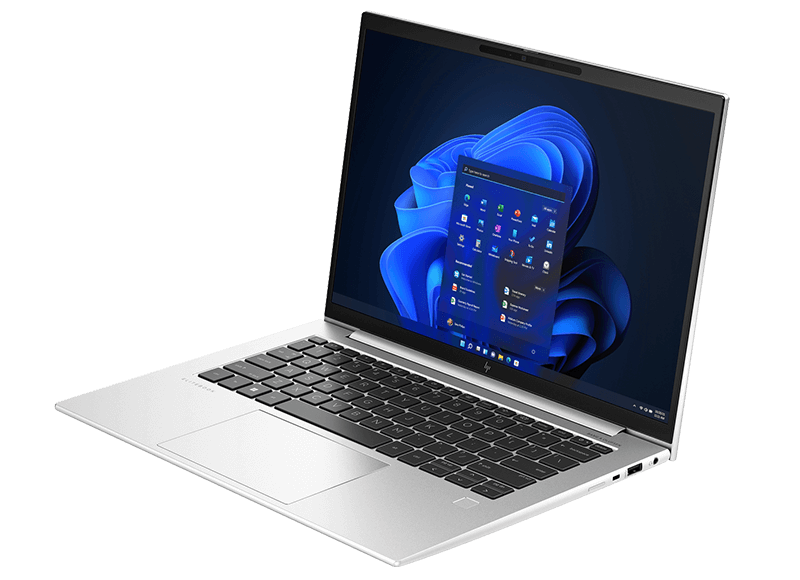
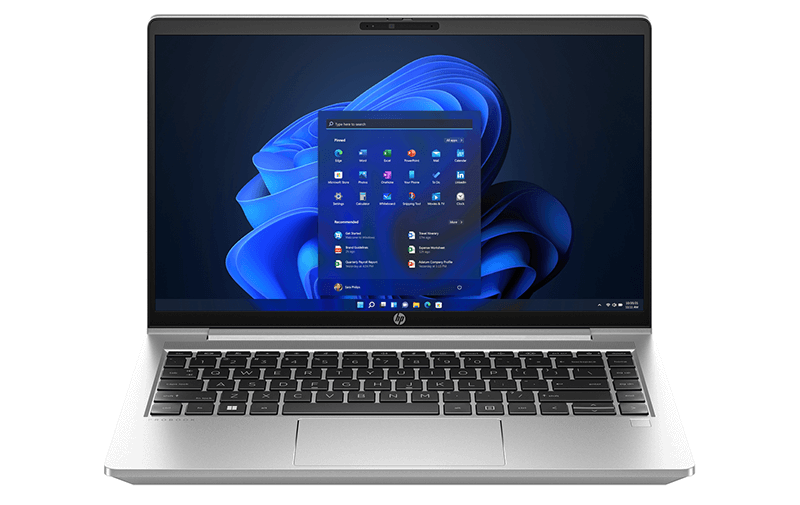
HP business notebooks help organisations create modern workplaces that are stable, secure and cost‑efficient. The ProBook, EliteBook and ZBook series cover a wide range of roles across the company—from traditional office setups to hybrid working.
Bechtle supports you as an experienced IT partner—from assessing your requirements to managing device fleets and ensuring long‑term operation.
Why HP business laptops matter in the corporate environment.
HP’s philosophy has remained constant: work devices must perform reliably, stay secure and be straightforward to manage. In companies with hybrid teams and diverse roles, these qualities are essential to keeping operations smooth.
In 2026, HP is continuing to focus on three core principles:
Reliability.
Robust chassis, long battery life and rigorously tested components.
Security.
Hardware‑based protection, modern identity features and data‑privacy functions.
Predictability.
Clear product line structures, long‑term model continuity and well‑defined configuration options.
HP laptop series at a glance.
Processor options for 2026 – The factors that matter.
Choosing a processor is less a technical decision and more an economic one. It influences how smoothly applications run, how many processes can operate in parallel and how local AI capabilities will support future workflows.
Intel Core Ultra / Ultra 7 / Ultra 9.
These processors combine efficiency and performance cores to deliver stable productivity and built‑in support for on‑device AI. In scenarios where data needs to stay local, that integration becomes a real advantage.
AMD Ryzen / Ryzen 5.
Ryzen processors offer a strong balance of energy efficiency and multicore performance, making them an attractive option for many office environments that run multiple applications and parallel tasks.
AMD Ryzen AI.
Ryzen AI adds dedicated acceleration layers for local analysis. This is particularly valuable for organisations operating in sensitive areas where data cannot be sent to the cloud.
The key point is simple: not every role needs AI acceleration or maximum multicore performance. The real skill lies in assigning the right device profiles to the right users.
Memory and storage – Sizing them sensibly.
Clear standards make life easier for organisations, which is why a simple breakdown helps:
- 8–16 GB RAM for traditional office work
- 32 GB RAM or more for creative applications, development environments or virtual machines
- NVMe SSDs between 256 GB and 1 TB for fast load and boot times
Devices that can be upgraded extend their useful life—a real economic benefit for companies working with fixed investment cycles.
Security, management and connectivity with HP laptops.
Modern working environments only function effectively when devices are well protected and centrally manageable. In HP business laptops offer:
- Hardware‑based security (TPM 2.0)
- Biometric authentication
- Camera shutters and privacy features
- Models with vPro support
- Wi‑Fi 6/6E and Bluetooth LE
- Optional LTE/5G connectivity
- Wolf Pro Security for Business
For businesses, this means device fleets can be managed consistently and security requirements are reliably met—regardless of where employees are working.
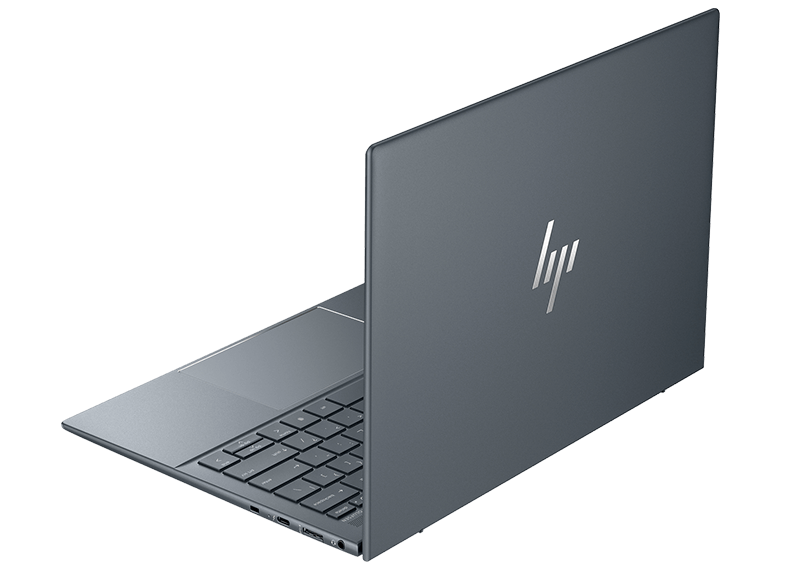
Mobility, display and battery life.
The demands on mobile workplaces have changed. Employees no longer work only in the office or at home—they move between locations, projects and customers.
Relevant factors:
- Weight under 1.2 kg makes daily transport easier
- Bright displays support work in changing light conditions
- Fast‑charging features reduce downtime
Devices such as EliteBook and EliteBook X meet these requirements particularly well.
Graphics performance – Determined by what you do.
Not every role needs a dedicated graphics card, so clear differentiation is key:
- Integrated graphics (Intel Iris Xe, AMD Radeon)
→ Ideal for office work, web applications, video calls and light media editing - Dedicated graphics
→ Relevant for 3D, CAD, professional media production, simulations and analytical workloads
ZBooks are optimised for these requirements and can be configured to match the professional software in use.
Selection guide – The right HP business series for your needs.
Clear categorisation helps you make decisions and build cost‑efficient hardware strategies.
Standard office
→ HP ProBook
Typical: 8–16 GB RAM, SSD, Full HD display
Mobile professionals.
→ HP EliteBook, EliteBook X
Typical: Lightweight, long battery life, mobile data connectivity
Creative, development and engineering
→ HP ZBook
Typical: 32+ GB RAM, dedicated GPU, high‑performance CPU
Example configurations for common use cases.
Clear standardisation helps streamline procurement and simplify service processes.
These configurations have proven effective in corporate environments:
Office work
Intel Core i5 or Ryzen 5, 8–16 GB RAM, 256–512 GB SSD
Frequent travellers
EliteBook, 16 GB RAM, long battery life, LTE/5G option
Compute‑intensive workloads
Intel Core Ultra 7 / 9 or Ryzen AI, 32 GB RAM, 1 TB SSD, dedicated GPU