AI agents – Remapping decision‑making.
When Christopher Columbus set out to make a known route more efficient, he ended up discovering something entirely new. Vasco da Gama connected economic regions that had previously existed in relative isolation. And eventually, Ferdinand Magellan demonstrated that the world could be understood as a single, connected system. What changed the world was not technology alone, but a willingness to see it differently.
Today, organisations find themselves at a comparable point with AI agents. The technology is here to stay, and its capabilities are well established. Its real value, however, only emerges when organisations start to rethink their processes, roles and the logic behind their decisions.
PAI Spaces – A place to explore the next phase of AI in practice.
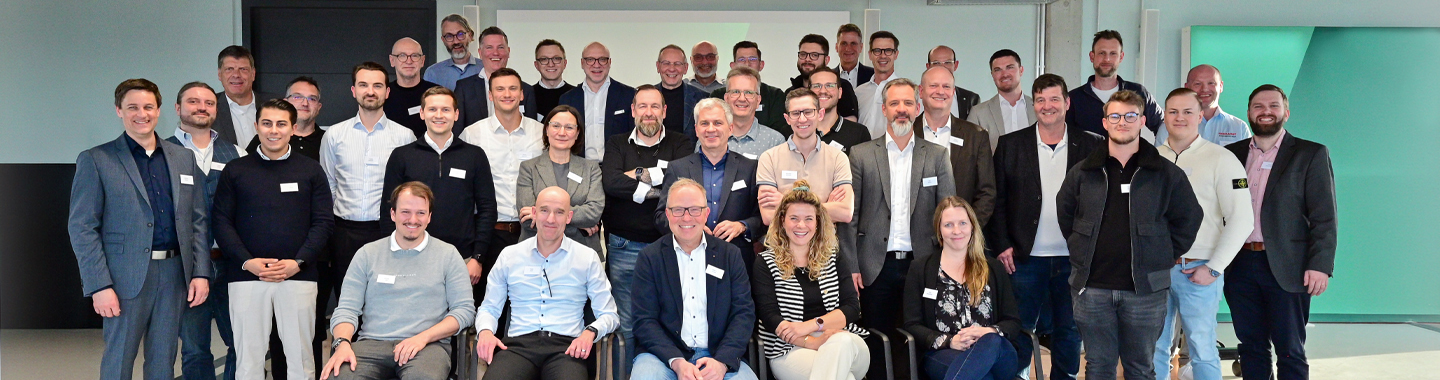
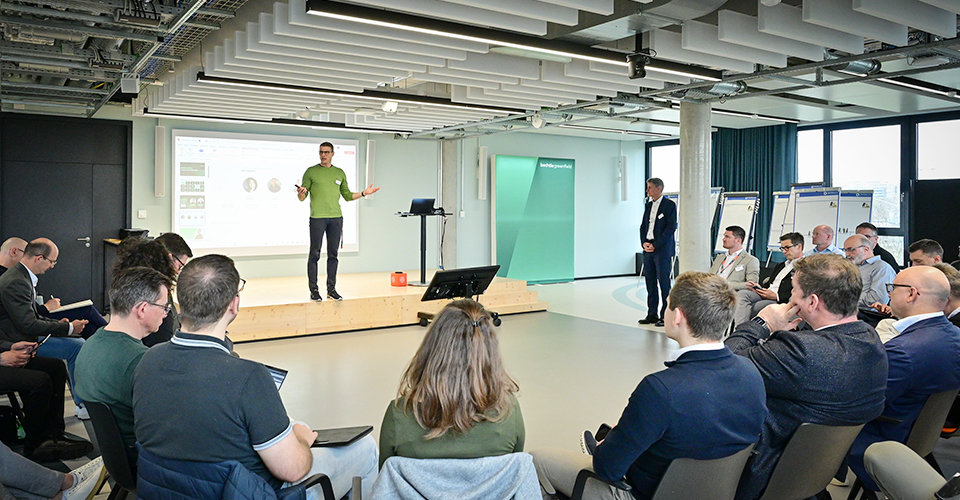
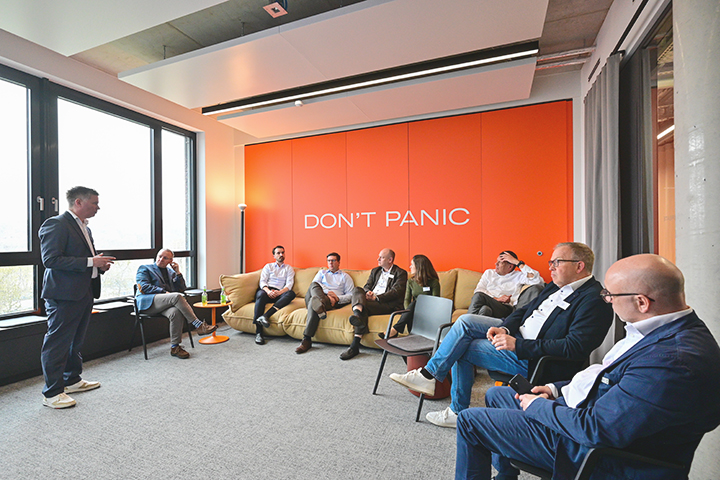
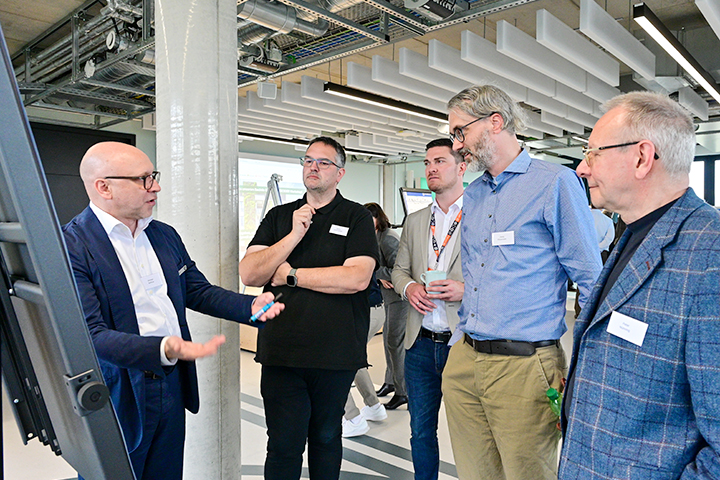
On 25 March, more than forty senior decision‑makers came together at the IPAI Spaces in Heilbronn to explore a shared set of questions: how can AI systems be embedded in organisations in ways that are both effective and scalable? And what forms of collaboration emerge when human and artificial intelligence are brought together in a structured way?
CIOs, Chief AI Officers, CHROs and business leaders from a range of industries took part in a peer‑level workshop at IPAI, working through how organisations can move beyond isolated AI use cases towards approaches that hold at scale. The workshop was supported by the Alliance for AI Competence Germany, Bechtle Greenfield and IPAI itself. The choice of location was deliberate: an innovation hub closely tied to the challenge of translating technological potential into institutional practice.
The workshop made clear that introducing AI agents is not just a technological leap, but an organisational learning process. Actively shaping this transition opens up not only efficiency gains, but new room for action.
The workshop made clear that introducing AI agents is not just a technological leap, but an organisational learning process. Actively shaping this transition opens up not only efficiency gains, but new room for action.
Technological change follows familiar patterns.
Exploratory journeys like those of Columbus, Magellan and da Gama did more than reshape trade routes. They gave rise to entirely new roles – navigators, cartographers, trade strategists, logistics specialists – and forced established elites to acknowledge that new skill profiles were taking shape, ones for which they themselves had no preparation. The deeper challenge was not the technology as such, but the question of trust: whether people were willing to rely on an instrument before fully understanding where it might lead. At the time, this meant the sextant and new methods of navigation. Today, it means AI agent systems and probabilistic approaches to decision‑making.
What organisations are grappling with today.
Perhaps the most provocative insight of the day was this: the greatest obstacle to AI agent systems in organisations is not the technology itself. It is uncertainty about the conditions under which AI agents are meant to be used – and permitted to be used – and the objectives they are expected to serve. A brief check‑in among participants showed that many organisations still lack clear structures, frameworks or guidance to address these questions. And while there is often a strong sense that AI will fundamentally change the nature of work and working conditions across many areas, leaders who speak about AI without hands‑on experience struggle to drive transformation with credibility.
A second line of discussion focused on the organisational structures that make scale possible in the first place. Many organisations are currently trying to integrate agent‑based systems into existing setups. This may seem sensible at first, but in practice the limits of this approach quickly become clear: agents that operate without clearly defined responsibility, without access to relevant systems, and without being embedded in decision‑making processes have little effect.
The practical discussions also highlighted that AI agents do more than speed up processes. They make organisational interfaces visible that previously remained implicit. When agents link data environments, inform decisions or carry out actions independently, they change how humans and machines work together. The impact therefore goes beyond traditional automation: it reshapes how responsibility is distributed and coordinated within organisations.
Why AI is not an IT project.
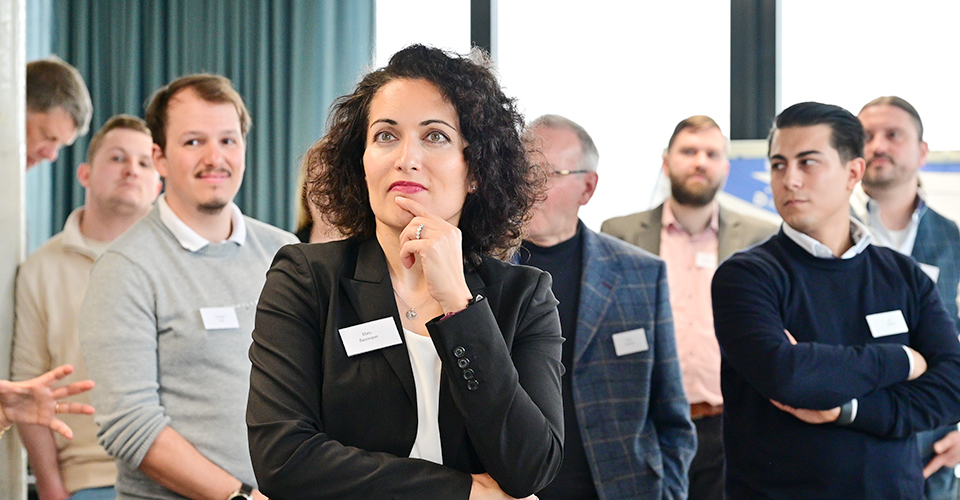
The discussions therefore centred on an operating model that goes beyond IT and deliberately involves the business functions and centralised capability structures. A major focus was how organisations can actively build trust in agentic systems. After all, AI does not scale through raw technical capability alone; it scales through governance models that define room for manoeuvre while keeping risk in check. Organisations need clear criteria for reliability, escalation paths for uncertainty, and well‑defined rules for how humans and machines interact.
This is closely tied to the question of skills. Introducing AI agents does not simply add new tools; it shifts the role and relevance of existing positions. Organisations need the ability to deal with uncertainty, to design decision‑making processes, and to orchestrate hybrid systems. At the same time, it is becoming clear that AI will not deliver the same benefits across all functions. An AI agent supporting knowledge work has very different effects from AI used in production, service or logistics. What is required are differentiated strategies tailored to industries, organisations and specific roles – generic approaches fall short.
Expertise and experience must work together.
What is clear is that transformation needs to be driven by people who not only have the right capabilities, but also an appetite for change – people who see uncertainty as an opportunity and are willing to move beyond established paths. Many organisations already work with individual performance objectives, yet these rarely include concrete references to the use of AI. Used deliberately, such a structural lever could significantly accelerate adoption. Organisational transformation rarely takes hold unless it is also reflected in how goals are defined and assessed.
The parallel with early voyages of discovery ultimately lies in the combination of pioneering spirit and the need to navigate multiple layers of uncertainty. Those expeditions were not linear innovation projects either. They were attempts to apply new instruments without being able to predict the outcome. Today, as then, people often only find their bearings through action.
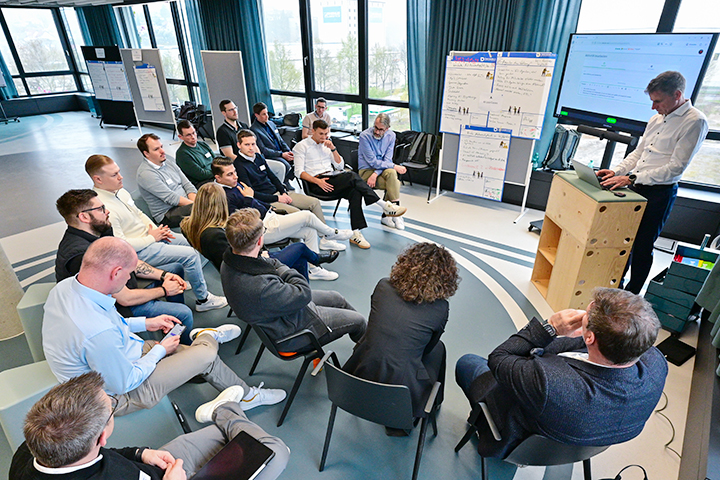
People find their bearings through action.
The discussion in Heilbronn made clear that introducing AI agents is a cross‑organisational effort involving all stakeholders. This shift affects how decisions are made, which skills gain importance, and how authority is distributed within organisations.
As with Magellan’s expedition, a new view of the world does not exist at the outset; it takes shape over the course of the journey. The maps are drawn along the way. Which new roles, responsibilities and forms of expertise will ultimately take hold can only be sketched in outline at this stage. What is certain is this: the journey has begun.