Cisco Sustainability
Cisco Partner Logo 2026

Together for a sustainable future.

Climate‑related phenomena, natural disasters and the loss of biodiversity are increasingly visible consequences of climate change, requiring coordinated and responsible action. Against this background, sustainability has become a central consideration in business decisions, which is why Bechtle, together with Cisco, is committed to contributing to more sustainable ways of living and working.

As a signatory to the WIN Charter and the UN Global Compact, Bechtle pursues its Sustainability Strategy 2030 with the objective of promoting responsible and sustainable business practices, an approach that depends on close collaboration with partners who share the same principles.

Cisco is not only a strategic partner to Bechtle, but also a signatory to the UN Global Compact, with a clear commitment to supporting an inclusive and sustainable future. Guided by these shared objectives, Bechtle and Cisco work together to advance sustainability in a practical and measurable way, underscored by Bechtle’s certification as a Cisco Environmental Sustainability Specialist.

Treating waste as a resource.

Cisco’s circular approach.

Please allow cookies to see content from YouTube.

We use YouTube to embed video content on our website. This service may collect data on your activity. For more information, please go to the settings page.

Delivering sustainability with the Cisco Catalyst portfolio.

Cisco integrates sustainability into the design, development and production of its solutions with the aim of supporting long‑term, responsible business practices. Progress is achieved by strengthening circular economy principles across every phase of the product lifecycle.

Usage:

  • Improved energy efficiency
  • Software‑based automation to reduce energy consumption
  • Energy savings for smart buildings
  • Higher performance per watt

Reuse and recycling:

  • Product take‑back programmes supported by the Send IT Back app
  • Sustainability partnerships
  • Specialisation certifications

Production:

  • Use of more sustainable materials
  • Optimised shipping through multipack SKUs
  • Use of integrated environmental sensors
  • Reduced material use in manufacturing and packaging

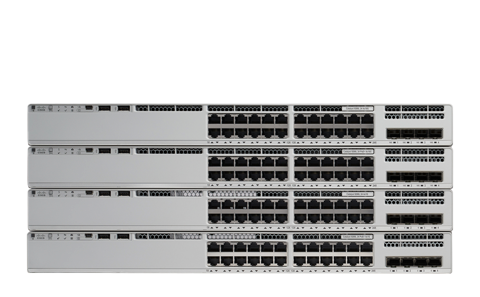
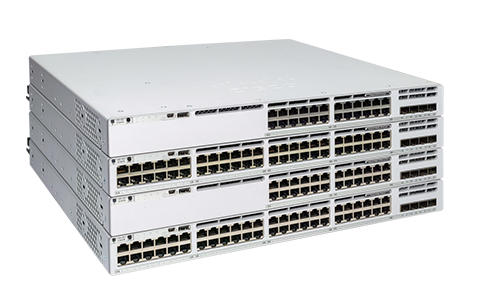
Boost your sustainability with the enhanced Cisco Catalyst 9000 switches.

Cisco Catalyst 9200

Discover the Catalyst 9200L. 

Cisco Catalyst 9300

Discover the Catalyst 9300. 

Oldies are still goldies?

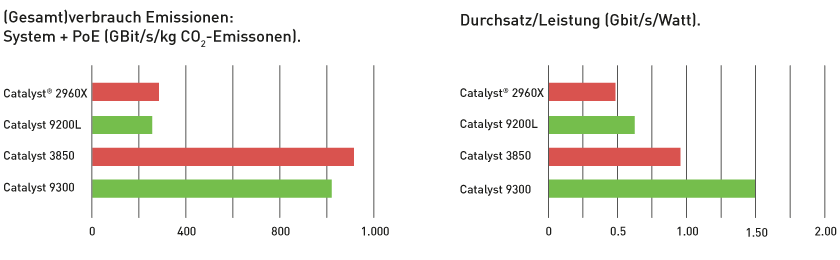
A comparison of Cisco Catalyst 9000 switches with earlier models:
Cisco Gesamtverbrauch Emissionen

Product carbon footprint.

Catalyst 2960X

276*

Catalyst 9200L

263*

Catalyst 3850

953*

Catalyst 9300

903*

*Global Warming Potential (kg CO₂ equivalent)

Cisco’s goals for a sustainable future.

Cisco has committed to building a sustainable future by reducing emissions and waste, developing more efficient products and setting ambitious yet achievable targets.

Net zero.

Cisco aims to achieve net‑zero greenhouse gas emissions across Scope 1, Scope 2 and Scope 3 by 2040.

100%

By 2025, all new Cisco products and packaging are planned to incorporate circular design principles.

30%

By 2030, Cisco aims to reduce Scope 3 greenhouse gas emissions associated with its supply chain by 30%.

70%

By 2025, Cisco seeks to ensure that 70% of its component and manufacturing suppliers operate at one or more sites that meet a zero‑waste goal.

Cisco customers.

Cisco supports all customers in achieving their sustainability objectives.

Sustainability in numbers.

The Cisco Catalyst 9000 switch family supports multiple sustainability initiatives:

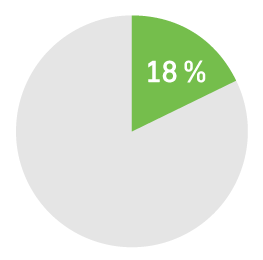
90 W PoE enables 18% less wasted energy.

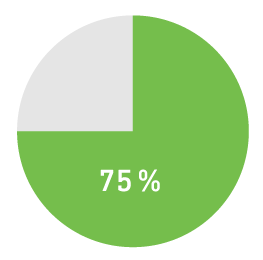
Reduction of foam
in product packaging by
75% (measured by weight).

1,000‑fold bandwidth
at the same power level

Bandwidth increase without a significant rise in power consumption.

Cisco achievements include …

less use of new plastics.

renewable energies.

reduced Scope 1 and Scope 2 greenhouse gas emissions.

Cisco’s contribution to a sustainable future.

Bechtle is working with Cisco to support long‑term sustainability. To put this approach into practice, Cisco pursues a range of sustainability principles in close cooperation with its partners.

Cisco involves distributors, partners and customers in its circular economy approach.

This enables Cisco products to be refurbished, certified and covered by all required warranties, while innovation and digitalisation are also supported. Technologies such as IoT, big data and AI help track resources and assets, monitor usage and generate data insights to reduce waste. Products and materials therefore remain in use for as long as possible, allowing their value to be maximised over time.

Cisco’s commitment: 100% product take‑back.

To support the circular economy and achieve Cisco’s sustainability goals, Cisco commits to taking back its products.

Cisco Senditback App

Cisco services:

  • Free collection and transport of products for customers worldwide
  • Introduction of alternative business models such as trade‑in, bank financing, leasing and Product as a Service
  • Warranty, replacement, service and repair offerings for all Cisco products to extend lifecycles

Using its Send IT Back app, Cisco repairs, recycles and refurbishes returned IT solutions, allowing customers to return products easily, securely and sustainably. 99.8% of devices returned to Cisco are already recycled or refurbished.

By 2025, all Cisco products and packaging are intended to follow circular design principles.

Cisco is committed to designing its IT solutions and packaging so they can be reused and repaired while conserving resources.

Sustainability at the core of Cisco product development.

Cisco develops technologies for cities and buildings that help reduce energy consumption, as well as tools such as Cisco Webex that enable employees to work from anywhere, contributing to lower CO₂ emissions.

Cisco invests $100 million over a ten‑year period in sustainability programmes.

The investment supports innovative and efficient climate solutions that promote a net‑zero economy and strengthen circular‑economy approaches.

Sustainable logistics by Cisco and Bechtle – The Bechtle Box.

Please allow cookies to see content from YouTube.

We use YouTube to embed video content on our website. This service may collect data on your activity. For more information, please go to the settings page.

As part of the Cisco Sustainability Challenge 2022, Bechtle set out to develop an end‑to‑end sustainable supply chain for Cisco products, extending from Cisco manufacturing through to the end customer. The approach includes tracking Cisco shipments via Cisco software and third‑party solutions, based on Cisco infrastructure and innovative technologies. Through this innovation, Bechtle has developed a go‑to‑market model based on Cisco infrastructure that integrates customers into a sustainable supply‑chain approach, with the Bechtle Box as a central component.

Benefits of the Bechtle Box:

  • Packaging materials completely eliminated
  • Value‑added services, such as asset tagging
  • Made from recycled materials
  • Optimised space utilisation, increased by 100% through stackable boxes
  • Customers can use the products immediately
  • No disposal of outer packaging required
  • Reduced transport damage
  • Greater protection than cardboard due to the use of more durable materials

Have questions about sustainability at Bechtle? Want to find out more about Cisco systems?

You can find out more details about both companies’ sustainability strategies here.

Bechtle Sustainability Strategy.
Cisco’s Environmental Sustainability.
Mathias Deufel

Your contact for all things Cisco sustainability.